What People Get Wrong About Focus
Most people think focus is just about planning their time. They believe that if they just block out four hours on a Tuesday and hide their phone, their concentration will magically appear. This seems easy because it makes being productive look like a simple organizing task.
However, your brain doesn't follow your schedule.
When you treat focus like a scheduling issue, you get caught in busywork instead of real work. You sit at your desk for the whole blocked-out time, but since you haven't built up the mental strength for it, you end up staring at nothing or just cleaning up your computer files to look busy. You finish the day feeling bad and tired, wondering why you aren't getting as much done as you feel you should be.
The error is trying to perform at a high level right away.
To fix this, you must stop and look at how your brain is truly handling your daily work routine.
We need to stop using strict time schedules and start treating concentration like a physical skill that needs training.
Short, intense work periods are the starting point. Learning the specific steps that shift your brain from scattered to deeply involved helps you stop struggling against your own mind and start achieving real results.
What Is Deep Work?
Deep work is professional activity performed in a state of distraction-free concentration that pushes your cognitive capabilities to their limit. These efforts create new value, improve your skill, and are hard to replicate. The opposite, shallow work, is the email-checking, meeting-attending, inbox-managing activity that fills most modern workdays without producing anything significant.
The term was popularized by Cal Newport, a computer science professor at Georgetown University, in his 2016 book Deep Work: Rules for Focused Success in a Distracted World. Newport's core argument: as distractions multiply, the ability to focus deeply becomes both rarer and more valuable.
The numbers support him. According to research cited by the University of California, Irvine, the average worker is interrupted every 11 minutes, and it takes up to 23 minutes to fully regain focus after each interruption. That adds up to over 127 hours per year spent just recovering attention, according to an Economist Impact report. This isn't a minor inconvenience. It's a structural drain on your best thinking.
Main Points
-
01
Stop Valuing Busyness, Start Valuing Deep Work Don't judge yourself by how many emails you send or how quickly you reply. Real career progress comes from your ability to stick to one important, difficult task without losing your train of thought.
-
02
Move from Reactive Juggling to Planned Deep Work Stop trying to squeeze important work into the small gaps between meetings and pings. Instead, set aside time you absolutely cannot interrupt, where your only goal is to create high-quality work in total focus.
-
03
Rely on Your Setup, Not Just Your Willpower Don't rely only on self-control to fight distractions; willpower runs out. Instead, create surroundings and systems where getting distracted isn't an easy option, making deep focus the natural choice.
Checking Your Work Habits: Signs and Fixes
Check-In #1: The Calendar Lie
You block out four hours on your schedule and set your status to "Do Not Disturb," but you end up just tidying your computer files or staring at a blank screen during that time.
Deep thinking is a real skill, not just a matter of scheduling. You are trying to do a long mental effort without any practice, so your brain "cramps" because it doesn't have the stamina for that long.
Short, Intense Focus Bursts
Stop aiming for hours of work. Begin with 25-minute periods where you focus completely on one thing, followed by a five-minute break. Only increase the work time once you can complete the short sessions without getting distracted even once.
Check-In #2: Trouble Starting
You feel heavy resistance or mental fuzziness the second you sit down to work, which leads you to do "just one quick thing"—like checking email—before you start the real work.
Your brain can't instantly switch from reacting to emails to thinking deeply. Without a helpful bridge to transition your mood, you waste the best part of your scheduled time just trying to "warm up."
Your Starting Routine
Create a 60-second set of actions you do every single time before you begin. This could be cleaning your physical desk, putting on certain headphones, or writing down your single goal for the work session. This routine acts as a mental "switch" that signals your brain it's time to focus. If your digital environment is also cluttered, a digital declutter before starting can remove a major source of friction.
Check-In #3: Worrying About Missing Out
Even when you are focused on a task, you worry you're missing an important message, which makes you "quickly check" your phone or Slack every fifteen minutes.
You have trained your environment—and yourself—to prioritize fast replies over high-quality work. If you don't clearly state what is truly urgent, the outside world will always interrupt your important work.
Setting Clear Reply Times
Announce specific times during the day when you will be available for quick replies and times when you are unavailable for deep work. Predictable availability removes the guilt of being offline and kills the urge to constantly check for urgent messages.
The research on availability culture is stark. A 2025 survey by Resume Now found that 58% of employees spend between 30 minutes and one hour daily on non-work activities driven by digital interruptions. Microsoft's 2025 Work Trend Index found that 80% of global workers report lacking the time or energy to do their jobs well, with frequent digital interruptions as the primary cause. The cost isn't just time. It's the erosion of your capacity to produce work that actually matters.
The Focus Sprint Plan
Setting Up Your Work Area
Get rid of the things that normally pull you away by setting up your physical and digital boundaries.
- Choose a Deep Work Spot: Pick one specific place where you only do focused work.
- Phone Out of Sight: Your phone needs to be in another room or hidden in a closed drawer.
- Digital Cleanup: Close every computer tab you don't need and turn off all pop-up alerts on your computer.
The 90-Minute Tryout
Train your focus ability by working in dedicated, manageable chunks of time.
- Plan the Time: Block off 90 minutes, ideally when you feel most energetic.
- One Clear Goal: Write down exactly one thing you plan to complete before you start.
- No Turning Back: Do not get up or switch tasks until the 90 minutes are finished.
Active Rest
Manage your energy between focus sessions so you don't get worn out.
- Break Without Screens: Take a 15-minute break after your work sprint and avoid looking at your phone or email.
- End of Day Routine: Write down the three things you need to do tomorrow and mentally "close" your workday.
- Move Your Body: Get at least 20 minutes of exercise daily to clear your head.
Managing your mental energy between sessions is also tied to mindfulness habits at work, which can help you recover attention faster and reduce the residual anxiety that bleeds into your next session.
Reviewing Your Performance
Track how you are doing and change your plan to get the best results.
- Count Your Deep Hours: Keep track of all focused work time (Aim for 10–15 hours a week).
- Find the Cause of Lapses: Figure out what made you lose focus during the week.
- Update Your Plan: Move your 90-minute work blocks to the times you felt the strongest and start again.
How Cruit Helps You Build Deep Work Skills
Turning Big Dreams into Clear Steps
Career Guidance ModuleHelps you avoid the initial struggle by turning your general goals into specific, measurable targets through conversations with an AI Mentor, ensuring you start deep work with one clear goal.
Using Data to Know Where to Focus
Job Analysis ModuleGives you a strategic advantage by checking your resume against job postings, pointing out the exact "Matching Skills" and "Skill Gaps" so your deep work is targeted.
Recording Your Progress Without Distraction
Journaling ModuleOffers a writing space free from distractions to log your accomplishments and lessons immediately, creating summaries of your skills for future use.
Common Questions
What if my job requires me to be "always on" or available for meetings?
You don't need four hours of uninterrupted time to see progress.
If your day is full, try just twenty minutes of very focused work. Real deep work is about the quality of your concentration, not just how long you sit there. Even a short time of true focus is better than a whole day of constantly checking messages and getting interrupted.
What if I don’t have a quiet, private space to work in?
Focus is a mental habit you develop, not a specific location you need.
While a quiet room helps, you can train your brain to get focused anywhere by using simple actions. This could be just putting on noise-canceling headphones or closing every non-work tab on your computer. These small cues signal to your brain that it’s time to work, no matter what is happening around you.
What if I've tried to focus before and I still can't stay on task?
Feeling restless is a sign that your "focus muscle" needs practice, not a sign that you're broken.
You wouldn't expect to lift heavy weights on your first gym day, so don't expect to focus for hours right away. Start with ten-minute sessions and build from there. Consistency matters more than perfection.
How long should a deep work session be?
Start with 25-minute sessions and work up to 90 minutes as your concentration improves.
Cal Newport suggests the upper limit for most people is around four hours of deep work per day. DeskTime research points to a 75-minute work session followed by a 17-minute break as an effective rhythm for sustained focus. What matters most is starting shorter than feels necessary and building the habit first.
Is deep work the same as the Pomodoro Technique?
They overlap but are not the same thing.
The Pomodoro Technique is a time management method using 25-minute work intervals with short breaks. Deep work is a broader philosophy about protecting concentrated effort from shallow distractions. You can use Pomodoro sessions as a structure for your deep work practice, especially when starting out.
Take Back Your Concentration
Stop letting your workday become a loop of pretending to be busy. When you sit at your desk just to "look active" while staring at a blank screen or moving files around, you aren't actually getting important work done—you are just draining your energy.
Concentration is a skill you build, not something you schedule. When you treat it that way, the guilt from unproductive days fades and the mental toughness needed for high-quality work starts to form.
Start checking where your time really goes today.
You are capable of amazing work; you just need to give your brain the training it needs.
Further Reading
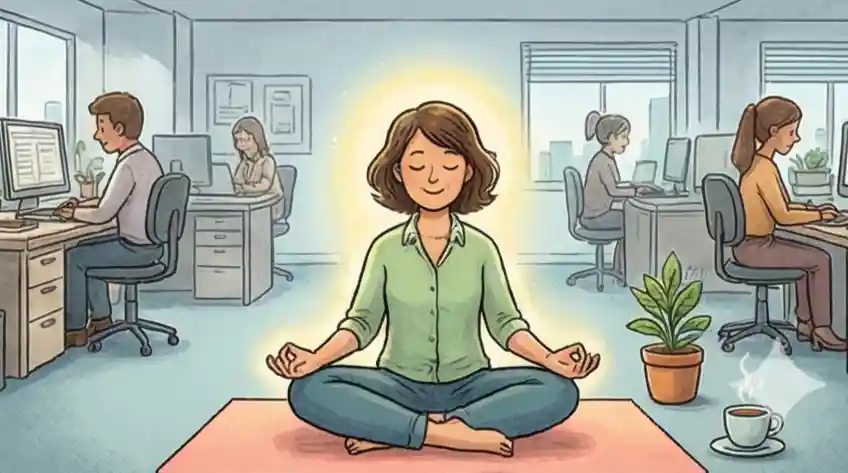
Mindfulness at Work: Simple Exercises to Reduce Stress and Improve Focus

Digital Declutter: How to Organize Your Digital Workspace for Peak Focus