
Summary of Strategy: What to Focus On
-
01
Limit Your Deep Focus to Four Blocks Only allow yourself four 25-minute sessions for your most important work each day. This small amount of time means your biggest projects move ahead, but you won't be unreachable to your team for more than two hours total.
-
02
Focus is Taking Care of Others Change how you think: Don't see this time as hiding. See it as making sure you provide clear, mistake-free decisions that keep your team working well.
-
03
Make Your Status Update Automatic Use tools to automatically change your Slack or Teams status to "Deep Work" as soon as your timer starts. Let the software explain your silence so you don't have to.
-
04
Have an "Emergency Only" Plan Set up a "Red Phone" rule. Tell people you are busy for 25 minutes but can be reached through one specific channel for only the most critical problems. This protects your focus but keeps a safety net for your team.
What Is the Pomodoro Technique?
The Pomodoro Technique is a time management method where you work in focused 25-minute intervals, called "Pomodoros," separated by short 5-minute breaks. After four consecutive intervals, you take a longer break of 15 to 30 minutes. Developed by Francesco Cirillo in the late 1980s, the method uses a timer to create a clear boundary between focused work and recovery.
For leaders and senior professionals, the method solves a specific problem: not a lack of time, but a lack of protected time. The 25-minute block acts as a defined window for your highest-quality thinking, separate from the constant flow of messages, meetings, and requests that dominate the rest of your day.
The Practical Guide for Leaders to Get Focus
Most productivity advice tells you to "start over" with your habits. But for someone experienced, that advice is a trap. You don't lack basic skills; you have a problem caused by your success.
As you get promoted, your value becomes tied to how reachable you are. You become the go-to person for tough questions and sudden problems. In this role, stepping away for 25 minutes to focus doesn't feel like progress — it feels risky. You worry that being quiet will stop your team from moving forward, making deep work feel wrong instead of necessary.
The cost of constant interruption is real. Research by Gloria Mark at the University of California, Irvine found it takes an average of 23 minutes and 15 seconds to fully regain deep focus after a single interruption. For a leader fielding five interruptions a day, that's nearly two hours of lost thinking time — not from laziness, but from fragmentation.
This guide isn't about a simple timer. Think of this as a Toolbox for Managing Your Brainpower. We are moving past "managing time" and treating focus as the most valuable asset your organization has.
This method groups together important decisions and ensures your best work gets your full attention for quality checks. A simple tool, paired with the difficult reality of your job, gives you a way to protect your focus without looking like you are ignoring your team.
Audit: What Leaders Must Stop Doing
To get to the next level, you must stop acting like someone just starting out who is always busy. To truly control your time, get rid of these three habits right now.
Thinking that being a good leader means being ready to answer every message and question right away. You believe being constantly present helps the team, but you’re actually just slowing down important thinking.
Practice Setting Time Aside on Purpose. Your worth is in good decisions, not fast replies. Blocking out 25 minutes isn't ignoring your team; it's making sure the strategy you give them is well-thought-out instead of a quick guess.
Ignoring simple methods like the Pomodoro idea because they feel too basic for your job level. You spend too much time searching for complex software or expensive planners because you think a big job needs a big system.
Use Simple, Strong Rules. The best leaders don't use the best apps; they use the best rules. A 25-minute timer is a tool for discipline, not a student's toy. Stop searching for a complicated answer to a simple problem: you need focus, and a timer is the quickest way to get it.
Feeling bad when you aren't actively involved in the team's daily tasks. You think 25 minutes of focus is selfish and slows things down, so you choose to stay busy with small jobs instead.
See focus as Checking for Quality. When you are always interrupted, you make more mistakes in your leadership. Protecting 25 minutes of focus is a job requirement. You aren't "hiding"; you are doing the important thinking that only you can do.
The Steps to Get Things Done as a Leader
Leaders often confuse always being reachable with being productive, seeing time away from email as selfish and harmful to the team.
Figure out which tasks need "Quality Control" (deep thinking about strategy) versus "Maintenance" (answering quick messages). Instead of trying to "find time" to focus, treat your focus like expensive company property that must only be used for your most important problems.
If you are always available, you aren't leading; you are just reacting to what everyone else wants.
It feels awkward to use a simple timer when you manage big projects and large teams; it feels too basic.
Give the Pomodoro idea a professional name, like an "Executive Deep Dive" or a "Strategy Session," to make it sound important. Tell your team that you are blocking this time to check the quality of your work, making sure the advice they get from you is focused and strong.
Your coworkers don't need to know exactly how you manage your time; they just need to know that the decisions you make during that time are the right ones.
Your pride stops you from using a simple tool because you think you need a fancy system to match your job title.
Use the 5-minute "break" after each focus session to quickly check urgent messages and give very fast advice to your team. This makes a regular schedule where your team knows you will support them every 25 minutes, which actually makes them more confident and faster.
The best leaders use the simplest tools because they don't waste brainpower to keep track of them while dealing with problems.
The Pomodoro Technique: The Simple Focus Method People Don't Talk About
The main reason people stop using Pomodoro isn't discipline; it's how they think others will see them. In most offices (and on chat apps), we feel we must always seem ready to reply right away—this is the Rule of Being Available. Starting a Pomodoro timer feels like you are drawing a line and saying "I'm busy."
It’s hard for two reasons: You feel lazy taking a break while others work, and you feel like a jerk refusing a quick, random question.
"I'm focused on this [Project Name] right now so I can get it done well. My timer ends in [X] minutes—can I come find you the moment it goes off? I want to give you my full attention instead of rushing this."
Don't think of your 25 minutes as "work time." Think of it as "surgery." No one expects a surgeon to stop operating for a quick chat; your deep work needs that same focus because interruptions cost too much mentally.
Why this works:
-
✓
It’s Team-Friendly: You aren't saying "Leave me alone." You're saying "I want to give you better help later."
-
✓
It Sets a Clear Time: People are happy to wait if they know exactly how long the wait will be.
-
✓
It Shows You’re Smart: It hints to your team that your time is organized and your tasks are important.
Cruit Tools to Help You Use This Focus Plan
For Team Conversations
Career Guidance ToolPractice ways to talk with leaders to make them see your focus time as checking for "Quality Control" for the company.
For Your Online Image
LinkedIn Profile ToolHelp you rewrite the results of your "Strategy Sprints" into strong, professional descriptions for your profile.
To Keep Track
Journal ToolQuickly write down achievements from your focus sessions, building a history of your "Quality Control" work.
Common Questions
What if someone needs me right away while I'm focused?
Think of your 25 minutes like an important meeting you can't leave. You wouldn't interrupt a serious meeting for a simple question, and your deep thinking deserves the same respect. Most "emergencies" can wait 25 minutes. Answering messages during your short breaks produces better, more thoughtful replies anyway. You aren't hiding; you are making sure you are fully focused when you do talk.
Does the Pomodoro Technique work for complex, high-stakes work?
Handling big strategy and complex issues is exactly why you need it. The goal isn't finishing a huge task in one session — it's protecting your brain from the fatigue that comes with constant task-switching. Breaking a big goal into 25-minute intervals keeps your thinking quality high. It stops the mental exhaustion that accumulates when you manage a major project while constantly checking your phone.
Will using a timer make it look like I can't handle my work?
The opposite is true; showing you are disciplined is a sign of good leadership. When your team sees you protecting your focus, you are teaching them what good work looks like. You show them that "busy" doesn't equal "productive." Using a system to manage your thinking proves you care enough about the quality of your choices to give them your full attention.
How many Pomodoro sessions should I do per day?
For leaders, four sessions per day is the practical ceiling. That's 100 minutes of protected deep work — enough to move important projects forward without making you unreachable to your team for long stretches. Francesco Cirillo, the technique's creator, recommends 8 sessions for individual contributors, but the 4-block limit reflects the real demands of a management role. Start with two sessions and build from there. More isn't always better; consistency matters more than volume. You can pair this with a time blocking approach to schedule these sessions at the right time each day.
What should I do during Pomodoro breaks?
Use the 5-minute break for low-effort tasks that don't require focus: check Slack or email, refill your water, or stand up and stretch. The key rule is to avoid starting anything that requires real mental effort — reading a long document, joining a discussion, or making a decision. The break is recovery time, not mini-work time. Keeping the break genuinely restful is what makes the next 25-minute session effective. For strategies on reducing overall stress during the workday, mindfulness at work pairs well with structured focus sessions.
Protect Your Most Valuable Resource
At your level, your focus isn't a personal habit — it is a critical asset for the whole company. The rule of experience says that the more valuable you become, the less time you have to think. But your experience should protect your time, not eat it up. This plan for focused work isn't "managing time" — it's making sure your most important decisions receive the full attention they deserve. Stop letting every notification control your day.
Start Setting BlocksFurther Reading
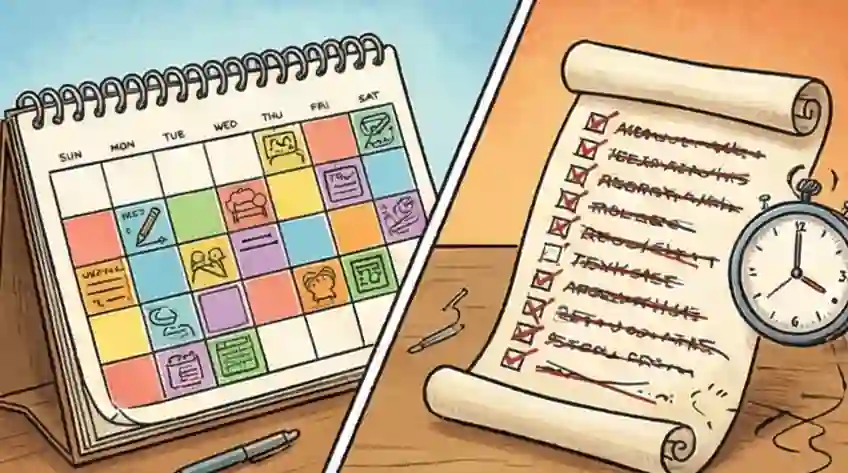
Time Blocking vs. To-Do Lists: Which Method is Right for You?

How to Build a Simple Portfolio Website to Showcase Your Work