Summary of Key Steps: How to Succeed Now
-
01
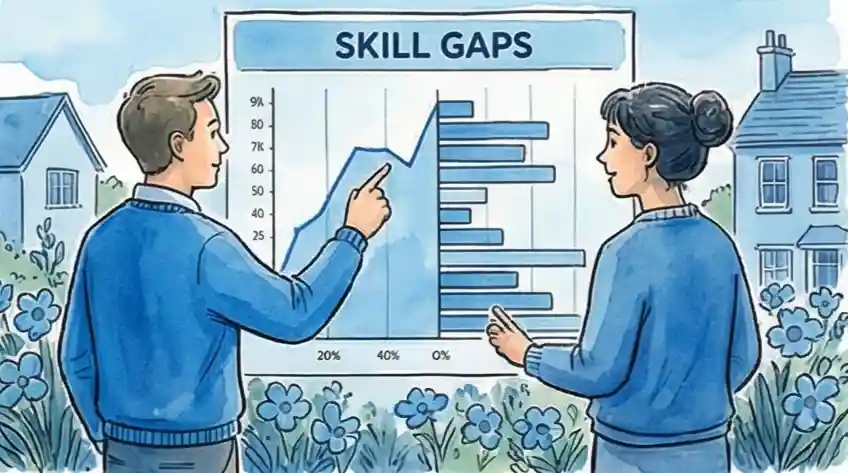
Focus on the Important 20% Concentrate on the small, modern skills (20%) that are stopping people from seeing your huge amount of experience (80%). If the current market can't see the small, new tools you use, they will overlook all the great things you bring.
-
02
Check Your Stock, Don't Feel Like a Student Instead of thinking you need to learn everything new, think of it as checking what you currently own. You are not trying to fix a mistake; you are updating your professional items to match what buyers want right now.
-
03
Use AI to Be Exactly Right Use tools like AI to figure out the exact little details (missing data) that cause hiring filters to reject you. Think of these tools as a way to change your big experience into the specific words and details machines need to see to get you past the first check.
-
04
Networking with a Purpose Don't ask for general help. Use what you found out about your skill gaps to find specific people who know the modern skills you are missing. This makes asking for help a smart, useful exchange instead of a vague request.
The Problem of Having Too Much Experience & How to Check Your Skills
Most career advice tells you to "go back to basics" or "start over" when you hit a wall. For an experienced person, that advice is useless and often insulting because you aren't a beginner. But, having many years of high-level work can cause what I call the Experience Paradox. This is like an "Expertise Fog" where the more senior you are, the harder it is to see the difference between your general deep knowledge and the exact, modern skills the job market requires today. You assume your wisdom is enough, but a computer system only sees the missing pieces of information.
Finding out you are missing a skill isn't a sign you are outdated; it’s a sign you need to Update Your Market Value. Don't look at the skill gap report like a student who failed a test. Look at it like a business owner checking their current stock. You aren't missing skills. You are just finding which of your current assets need to be updated or explained using today's language so that your value isn't misunderstood.
This guide is a Practical Guide for doing things well. We are moving past the idea of being generally great, which often stops senior people from getting jobs, and focusing on the exact, sharp actions needed to win. The Skill Gap Analysis tool ends the guessing. You can see exactly why applications fail and start treating your career change like the important business deal it is.
What Is a Skill Gap Analysis?
A skill gap analysis is a structured comparison between the skills you currently have and the skills a target job requires — identifying exactly where the gaps are. For experienced professionals, it acts as a translation layer between years of accumulated expertise and the specific terminology modern hiring systems need to see.
The analysis doesn't mean you're unqualified. It identifies which parts of your experience aren't being communicated in a way today's hiring process can recognize. McKinsey Global Institute research estimates the global skills gap costs $2.5 trillion in lost economic output — for individual job seekers, the gap is often not in ability but in language. Forbes-cited research found that executives estimate 49% of employees' skills will appear irrelevant to hiring systems by 2025, not because the skills vanished but because their descriptions didn't keep up.
To see which gaps the market finds most critical for roles you're targeting, run a job description analysis before writing your first application.
Things You Need to Stop Doing
To find the right job today, you must stop relying on the good name you built many years ago. Your experience only matters if today's systems can understand it. ManpowerGroup research found that 69% of U.S. organizations report difficulty filling jobs due to talent shortages — yet many experienced professionals get rejected because their resumes describe real skills in outdated language.
Relying on your "20+ years of being a leader" as protection. You think that because you've seen the economy change many times, bosses should trust you with modern problems without showing proof of modern skills.
Show Proof with Facts. Use the skill gap report to find the exact technical or method-based boxes you aren't checking. Instead of saying you have "broad knowledge," prove you have the specific, updated skills—like knowing how to use modern data tools or current software—that the job needs.
Thinking that because you managed a team that used a certain computer program, you "know" that program. You assume that your big-picture view is the same as being able to use the tools yourself in a small, modern setting.
Show You Can Use the Tools. See the gap report as a reality check for the skills you need right now. Realize that many modern jobs require leaders who can actually use the software, not just read the reports it creates. Change your strategic ideas into the current tools people use daily.
Seeing a skill check as a list of homework for someone just starting out. You feel that saying you have something new to learn makes you look old or hurts your professional pride.
Update Your Professional Items. Stop seeing the report as a test you failed and start seeing it as a translator. You are not "going back to school"; you are updating your professional items so your many years of value aren't "lost in translation" by a hiring system looking for specific modern words.
The Action Plan: Steps to Master the Modern Job Search
Senior people often think their high-level view means they know how to do the small tasks, which hides the specific technical things they are missing.
Use the Skill Gap report to do a "blind check" of your professional items against the job you want. Don't see missing skills as your fault; see them as missing information that the hiring system needs to see to trust your high-level experience. According to TestGorilla's 2024 State of Skills-Based Hiring report, 81% of employers now screen candidates on specific skills — up from 56% just two years prior. Your resume is evaluated against a checklist before a human reads it.
Think of this as updating your computer's software; your main system is great, but you need the right small programs (drivers) to talk to the new machines.
Experienced people often talk about their value using general praise, which doesn't use the specific words that recruiters and computer filters look for today.
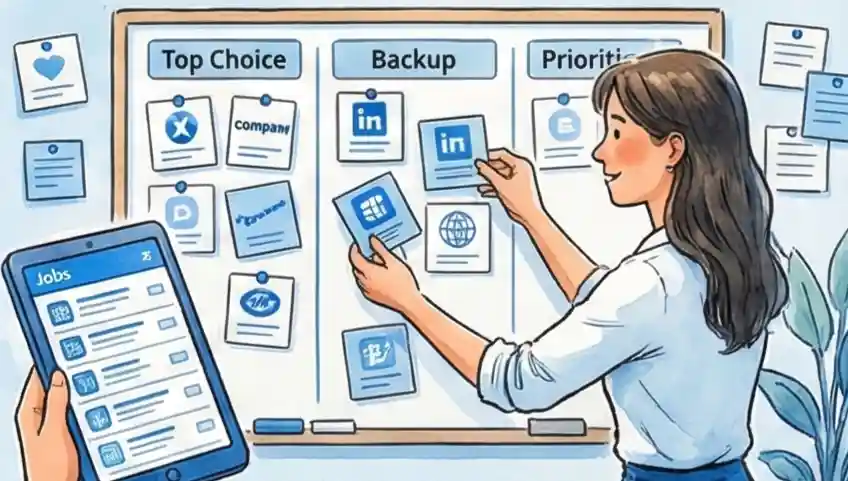
Take the gaps you found in Step 1 and find where your old jobs match these new terms. Change how you describe your past wins using the exact words from the gap report so your value isn't misunderstood when a recruiter first looks at it. Once you've updated your language, prioritize your job applications based on your strongest skills alignment scores.
Recruiters spend only a few seconds on a resume; if they have to spend time figuring out what you mean, they have already moved on.
There's a big fear that admitting you lack a specific tool or method in an interview will make your years of leadership look useless.
Use your gap report to turn the conversation around by showing how fast you can learn new things because of your deep experience. Change the talk from "I haven't used this tool" to "Here is how my big-picture thinking makes sure this tool gets the right results."
The best way to show confidence isn't pretending you know every button on the dashboard, but proving you're the best person to decide where the company ship should sail.
Using Skill Gaps to Guide Applications
Seeing your skill gaps creates a feeling of inadequacy.
Skill gaps trigger fear of being a "fraud." Seeing a few missing skills makes you feel unqualified to apply, rooted in the belief that only 100% matches should apply.
"I see a gap in [Specific Skill]. I have a strong base in [Related Skill] and am already closing the gap by [Action Taken]. I aim to apply my 80% expertise now and master the remaining 20% in the first 90 days."
Adopt the Growth Margin view. Managers want someone who is a 70-80% match — they need someone competent immediately but who still has room to learn and stay motivated. If you're unsure whether a role is the right fit before committing time to applications, the Job Fit Analysis helps you decide first.
The Technology That Helps Bridge Skill Gaps
Step 1 Fix: Job Check Tool
Removes the confusion of too much experience. It points out the exact "Skill Gaps" between your resume and a job, turning confusion into a clear list of things to fix.
Step 2 Fix: Resume Changer Tool
Fixes the problem of talking vaguely. It changes your value into the modern words and specific terms needed to pass the computer checks.
Step 3 Fix: Interview Practice Tool
Removes the worry of being found out. It uses a practice coach to help you structure your stories and practice how to connect your experience to new needs.
Common Questions Answered
Why does a skill gap analysis flag skills I clearly know how to use?
This happens because of the Expertise Fog. You know the high-level goal, but the market now uses new names and specific tools to reach that goal. The report isn’t saying you don’t know the job; it’s saying your professional history is written in old language the current hiring system doesn’t recognize yet.
Will closing skill gaps make me look less senior to employers?
Not if you treat this as Updating Your Market Value. You aren’t learning these skills to do basic work; you are updating your knowledge so you can correctly manage that work. Showing you understand the current tools proves you are a modern leader, not an old leader stuck in the past.
What if I don’t plan to use a flagged skill personally?
That’s the benefit of a high-level check. Knowing where the gap is helps you apply smartly. You can either quickly learn that skill or use that knowledge to explain how you hire and manage people for those specific roles. It turns a weak point into a conversation about your management skills.
How many skill gaps is too many to apply for a job?
There’s no firm cutoff, but most hiring managers look for a 70-80% skills match. Gaps in one or two requirements rarely disqualify a strong candidate. Gaps in skills listed multiple times in the job posting — or in the core function of the role — are the ones that matter. Use the gap report to distinguish deal-breaker gaps from secondary ones.
What percentage of job requirements should I match before applying?
Aim for 70-80% alignment on the skills explicitly stated in the job description. Research consistently shows that candidates who match most requirements but have room to grow perform better long-term than those who are a 100% match. The remaining gap becomes your 90-day development plan once you’re hired.
How long does it take to close a skill gap?
It depends on the type of gap. A terminology gap — learning to describe an existing skill in current language — takes days, not weeks. A tool-specific gap, like picking up a new software platform, typically takes 2-4 weeks of focused practice. A foundational gap in an entirely new discipline takes months. The skill gap report helps you tell these apart quickly so you spend time on what actually matters.
Stop guessing why your applications are ignored.
Stop seeing a career change as trying to climb back up a mountain you already conquered. Instead, see it as the business deal it is.
The Skill Gap report is how you check your professional items to make sure nothing gets lost when you talk to new companies. Your many years of experience are not a problem to fix; they are a huge protective wall for your value.
Once you update your current items to use today's language, you become the clear best choice.