What You Need to Remember
-
01
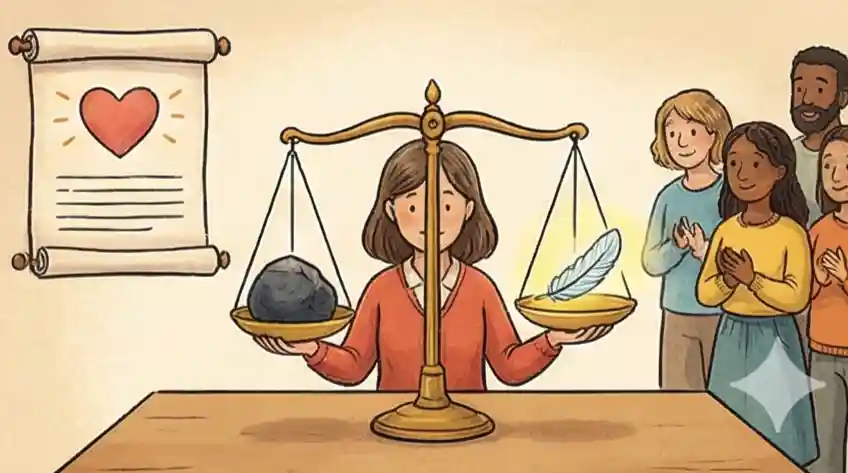
Don't Seek Agreement First Stop thinking that a quiet team means a good team. Wanting everyone to be nice stops you from fixing real problems and making needed changes.
-
02
Talk Directly, Not Around Instead of complaining to coworkers or running to the boss too soon, handle the issue directly and factually with the person involved. Avoiding the problem just lets small issues become big cultural problems.
-
03
Keep Your Ego Out of It Separate your feelings from the work issue so you can focus on finding a solution together, not on defending yourself. When you remove personal feelings, it’s easier for both sides to work together.
-
04
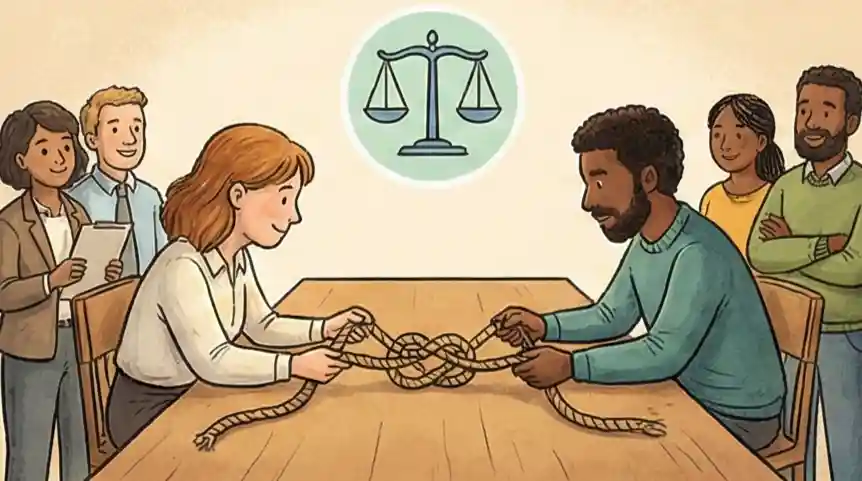
Focus on Shared Goals Always bring difficult talks back to what the company needs to achieve. When you see the conflict as something stopping both of you from reaching the main goal, it becomes a chance to work better together.
The Need for Peace vs. The Need for Action
A common mistake in the workplace is believing that when everyone gets along, the team is doing well. This idea, called the "harmony bias," causes people to freeze up when conflict appears, viewing it as a negative event instead of a necessary leadership move.
When disagreements happen, most people try to vent to friends at work or tell their manager too quickly. This feels good for a moment but doesn't fix the real problem, allowing small disagreements to slowly destroy the team culture.
To achieve great results, you must stop defending yourself and start focusing on the Shared Business Goals. By removing personal feelings from the discussion and tying the talk back to what the business needs to achieve, the conversation changes from complaining about people to improving how work gets done.
The guide below shows you exactly how to make this shift, turning potential arguments into chances to make operations much better.
"The ability to handle conflict constructively is one of the most underrated career skills. People who can walk into a tense situation, stay grounded, and redirect toward shared outcomes get noticed — and get promoted."
What Is Coworker Conflict?
Coworker conflict is any ongoing disagreement, tension, or friction between two or more colleagues that affects how work gets done. It ranges from communication breakdowns and competing priorities to personality clashes and disputes over responsibilities. Left unaddressed, it damages team culture, productivity, and individual reputations.
The scale of the problem is larger than most people realize. According to a global study by CPP Inc., 85% of employees experience workplace conflict to some degree. U.S. employees alone spend an average of 2.8 hours per week dealing with conflict, which translates to roughly $359 billion in paid hours annually. These aren't just interpersonal headaches. They're a direct drag on output.
The good news: conflict handled well is a career accelerator. Leaders consistently promote people who can resolve tension professionally without requiring management to intervene. The skill is not avoiding conflict. It's knowing how to move through it faster and smarter than everyone else.
If your workplace runs on people like you who handle conflict with a constructive feedback mindset, the whole team benefits. The strategies below give you a repeatable process for doing exactly that.
Using Workplace Clashes to Your Advantage
| The Problem / What Most Do Wrong | The Smart Move | The Result / What It Shows |
|---|---|---|
|
Complaining to Others
Talking to people not involved just to get emotional support for your side, which damages team trust.
|
Direct Goal Focus
Talk privately and factually only about how the problem is hurting the project's deadlines and business results.
|
Shows Trustworthiness
You stop gossiping and show you can hold yourself and others accountable professionally.
|
|
Trying to Keep Things Quiet
Hiding bad opinions or tough feedback just to make sure everyone stays "friendly," which hurts the final product quality.
|
Re-focus on How Things Work
Treat the argument as a technical problem where different ideas help find risks and make better choices.
|
Creates Real Performance
Moves the team away from fake politeness toward a high-energy culture where tough talk leads to better decisions.
|
|
Running Away from Hard Talks
Giving the problem to your boss or HR immediately because you don't want to deal with the awkwardness of a tough conversation.
|
Making a Clear Deal
Have a meeting where you both commit to what you will do differently in the future, setting new rules for how you communicate.
|
Creates Stable Working Habits
Stops small disagreements from becoming big cultural problems, saving the company time and leadership effort.
|
Your Step-by-Step Plan
Start the Private "Fix-It" Talk
Why: Addressing friction right away and privately keeps small misunderstandings from turning into serious cultural issues later.
What to Say: "I feel like there’s been some tension in how we’ve been working together, and I care about our relationship too much to let it sit. Can we meet briefly to get back on the same page?"
Tip: Do this face-to-face or over video, not email. Email makes it easy for people to imagine a mean tone that might not even be there.
Connect the Talk to Business Goals
Why: By making the issue about shared work goals, you move away from personal feelings and focus on improving how work gets done.
What to Say: "Let's set 'you and me' aside for a minute and look at our Project Goal. How is the way we are communicating right now affecting our deadline? What needs to change so we can hit our output target?"
Tip: Sit on the same side of the table or look at the same screen/chart. This physically signals that you are partners solving a problem, not opponents fighting each other.
Figure Out the "Information Gap"
Why: Most arguments happen because people have different information. Finding out what the other person is dealing with removes the idea that they are a "bad person."
What to Say: "I want to make sure I'm not missing something important. From your view, what are the biggest problems or time limits you are dealing with that make this part of the process hard?"
Tip: Be quiet for a few seconds after they finish talking. The most useful details often come out during that slight pause.
Write Down the New Promise
Why: Replacing a vague "let's get along" with a specific, written plan turns an emotional fix into a clear rule for work behavior.
What to Say: "So we don't have this issue again, let's both agree to [Specific Action, e.g., sharing updates every Tuesday]. Does that sound like something you can stick to?"
Tip: Send a quick follow-up email right after the meeting to put what you both agreed to in writing. This makes the new standard official.
Using Science to Handle Fights at Work
The Fundamental Mistake (FAE)
The Idea: We naturally think bad things others do are because of who they are (their personality), and we think bad things we do are because of outside reasons (the situation).
The Danger: You assume your coworker missed a deadline because they are "lazy," which immediately makes you angry and defensive.
What Should Happen: You should realize that you often blame your own missed deadlines on being too busy, but you blame others on them being flawed people.
Changing Your Thinking: From Blaming Character to Checking Context
The Idea: When you fight, try to think of three outside reasons why the other person might have acted that way, even if it's not their fault.
The Danger: If you only focus on how bad their character is, your stress stays high and you stay defensive.
What Should Happen: Forcing yourself to consider things like unclear instructions or other projects they have going on helps your rational brain take over from your emotional brain.
How to Re-Frame the Talk to Be Helpful
The Idea: Ask questions based on curiosity to shift the talk from blaming to solving the problem together.
The Danger: If you start with accusations ("Why did you mess up X?"), the other person will get defensive immediately.
What Should Happen: Asking, "What challenges are making it hard for us to agree on this?" calms everyone down and makes it a joint project to solve an issue.
These three thinking patterns explain why even well-meaning colleagues end up in conflict. The antidote in each case is the same: get curious before you get defensive. If the tension involves your manager rather than a peer, the same principles apply — see our guide on dealing with a difficult boss for specific scripts.
Your Essential Career Tools
For Planning
Career Guide ToolActs like a coach available anytime, using questions to help you create a step-by-step plan for handling tough conversations.
For Writing Things Down
Journal ToolA private place to record events, helping you change strong feelings into professional statements for later use.
For Practice
Interview PracticeRole-play tough conversations, practice structuring your answers clearly, and get feedback on how brief and clear you are.
Common Questions Answered
I'm shy and hate confronting people. What should I do?
Use the Plan and Schedule method. Write down the three main facts you need to raise so you don't get flustered. Instead of an unplanned chat, book a meeting titled "Quick sync on [Project X] workflow." This gives you time to prepare mentally and keeps the conversation short and focused.
How do I handle conflict as a new employee without seeming difficult?
Frame the disagreement as a learning opportunity, not a correction. Use phrases like, "In my last role, we handled this differently. Can you explain the reasoning behind how we do it here?" This signals curiosity and respect for the existing culture rather than criticism.
What if my coworker agrees to change but keeps doing the same thing?
Follow up with written recaps. Send a short email summarizing the agreed steps after each conversation. If the behavior continues, schedule a second meeting to address the gap between what was agreed and what's happening. At that point, you have documented evidence of good-faith efforts before escalating to a manager.
When should I involve HR or my manager in a coworker conflict?
Escalate when the conflict involves harassment, discrimination, repeated policy violations, or when two direct attempts at resolution have failed. Resolving conflict yourself first — and documenting those attempts — positions you as professional and proactive rather than a source of management overhead.
Is it better to address conflict by email or in person?
In person or over video is almost always better for conflict conversations. Email strips out tone, making neutral words sound harsh or passive-aggressive. A face-to-face setting lets both sides read body language, de-escalate in real time, and reach a clear agreement faster.
Choose Clarity Over Quiet
To move up, you must switch from wanting shallow peace to demanding clear results. By focusing on Shared Business Goals, you turn every workplace fight from a personal problem into a useful tool for making the whole team better.
Start building these communication skills today on the Cruit site, where you can find the tools and help to finally escape the bad habit of the Harmony Bias.
Stop protecting the peace and start making things happen.
Start Using Goal-Focused Methods