Summary of Key Points
-
01
The Local Rules Adjust your resume format to match the local laws and habits of the place you are applying. In the US or UK, putting a picture on your resume can cause legal problems for hiring managers. In many European or Middle Eastern countries, not having a picture can look suspicious. Following what is normal in that area shows you understand the unwritten rules of that business environment.
-
02
Focus on What You've Done, Not How You Look Change your focus from trying to be seen to providing clear information. A new employee might use a photo to get noticed, but a top leader should be judged by their past achievements. A photo can lead to "seeing less," where the recruiter judges you only on your looks instead of your many years of important successes.
-
03
Check for Computer Rejection Before you finish your resume design, test it with screening tools to see if a photo causes problems. Many company computer systems are set up to delete applications with pictures to avoid discrimination lawsuits. Do not let a trendy design choice get your application thrown out by a robot automatically.
-
04
Split Your Online Presence Think of your resume as your serious business proposal and your LinkedIn page as your friendly introduction. If the local culture suggests not using photos on paper documents, include a simple link to your LinkedIn page. This respects the official process while still giving people you know a way to see you as a person.
What Is a Resume Photo?
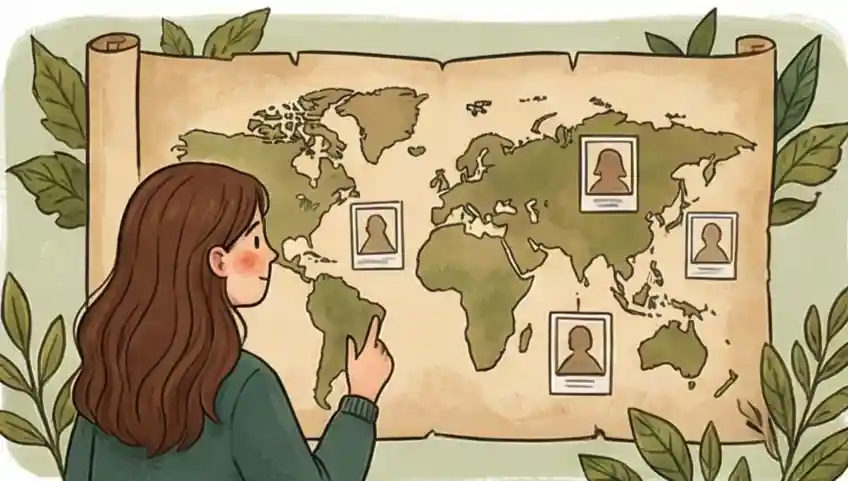
A resume photo is a professional headshot attached to your CV or resume document. Whether to include one depends on the country where you are applying: in the US, UK, and Canada, photos are discouraged to prevent hiring bias, while in Germany, Austria, Switzerland, and much of Asia, a photo is expected or required. Getting this right signals cultural awareness to employers.
According to a TheLadders eye-tracking study, recruiters spend an average of 7.4 seconds on their initial resume scan. A photo can dominate that first impression, shifting attention away from qualifications. In countries where photos are the norm, however, omitting one can raise red flags with hiring managers.
Your Photo Plan as a Senior Leader
Most career advice suggests changing your look to keep up, but for an experienced leader, that's the wrong idea. You are not a beginner trying to get noticed in a crowd; you are a valuable asset whose past work should speak for itself. The mistake many senior people make is called the Experience Problem. A new person uses a photo to be seen, but an executive needs to be read. Adding a photo can actually cause you to be judged quickly based on your look, ignoring your history of smart, winning decisions.
"At the executive level, you want the hiring committee reading your results before they form any visual impression. The resume is a business case, not a dating profile."
Sarah Johnston, Executive Resume Strategist, Briefcase Coach
Research backs this up. A landmark NBER study by Bertrand and Mullainathan found that resumes with white-sounding names received 50% more callbacks than identical resumes with Black-sounding names. If a name alone causes that level of bias, a photograph adds even more visual data for snap judgments.
This guide is not just general design advice. It is a Guide for Top-Level Action. We are changing the photo discussion from a choice about your image to a test of how well you know the rules for different markets.
In this guide, deciding if you include a picture is not about how you look, it's about Fitting Your Brand to the Location. When your resume format matches the rules of a specific area, it shows you have good knowledge of different cultures even before you talk to anyone. You prove that you already know the hidden rules of the area you want to lead, turning a simple format choice into a sign of being a mature professional.
Resume Photo Rules by Country
The rules change depending on where you apply. This table breaks down photo expectations across major job markets so you can adapt your resume to each region.
| Region / Country | Photo Expected? | Legal Context | What to Do |
|---|---|---|---|
| US, Canada | No | EEOC anti-discrimination laws; photos can trigger bias claims | Omit the photo. Link to your LinkedIn profile instead. |
| UK, Ireland | No | Equality Act 2010 discourages photos to avoid discrimination | Omit the photo. Focus on qualifications. |
| Germany, Austria, Switzerland | Yes | AGG exists, but cultural norm still expects a photo | Include a professional headshot on the first page of your CV. |
| France, Spain, Belgium | Yes | Common practice; omitting may seem incomplete | Include a photo unless the job posting says otherwise. |
| Scandinavia (Sweden, Norway) | Optional | Trending toward no-photo to reduce bias | Check the company culture. When in doubt, leave it off. |
| Japan, China, South Korea | Yes | Strong expectation; considered part of a complete application | Include a formal photo. Follow local format standards. |
| Australia, New Zealand | No | Anti-discrimination laws similar to US/UK | Omit the photo. |
| Middle East (UAE, Saudi Arabia) | Yes | Photos are expected and common on CVs | Include a professional photo. |
Bottom line: If you are applying to multiple countries, keep two resume versions: one with a professional photo and one without. Match the version to the local norm.
Checklist for High-Value Leaders: Stop These Basic Errors
Pay close attention: your resume is both a legal document and a plan for success, not something for social media. If you want to be treated like a top leader, you must stop making these three mistakes that beginners make.
People told you a nice picture makes you look "friendly" and "current." You worry that without a face, your many years of experience look boring or old-fashioned, so you add a photo to show there is a real person behind the words.
For top executives, a photo limits what people see. It turns twenty years of smart planning into a one-second guess about your age or your "feel." Stop trying to seem nice on paper. Remove the picture and make the hiring manager actually read your success history. Real leadership comes from data and results, not a smile.
You decide if you include a photo based on what you like, how much you paid for a picture, or if the resume template you downloaded has a spot for an image.
A photo is never just decoration; it is a "Rule for the Specific Market." In the US and UK, a photo is a legal risk that can get your resume thrown out right away. In countries like Germany or Austria, not having one can make you look like you don't know the local rules. Stop asking "Do I look good?" and start asking "What are the hidden rules of this specific country?" Match the location, not your self-image. If you're rethinking your overall layout, see our guide on resume design trends.
You are afraid of being "just another name" in a digital pile, so you add a photo to stand out and be remembered. You think you are helping the recruiter by giving them a face to match with the name.
You are not helping them; you are giving them a tool to judge you unfairly. A photo gives the brain a quick way to judge based on looks like age, background, or gender before they even look at your leadership history. Stop being "easy to judge." Remove the visual distraction and make your professional story so strong they have to interview you to see the person behind the power.
The Photo Choice: Showing Your Value vs. Being Stereotyped
Top leaders often worry that one photo will make their long, valuable career seem simple, judging them based on surface looks before the recruiter reads their achievements.
Figure out if a photo helps or hurts your "message" based on how far along you are in your career. If you are a new graduate, a photo might add a human touch, but if you are an executive, you need a story heavy with facts and figures that forces the reader to focus on your smart decisions instead of how you look.
If your past work involves decisions worth millions, don't give the recruiter a reason to judge you on your "feel" instead of your worth.
Many people treat the photo decision as a personal style choice, not realizing it's actually a test of their "Cultural Knowledge" about hiring rules around the world.
Look into the visual rules for the specific country you are applying to so you can show you know their hidden ways of doing business. For example, leave out the photo for jobs in the US or UK to respect rules against bias, but get a high-quality professional photo ready for jobs in Germany, Austria, or Switzerland where it's still expected.
Matching the look of a specific country isn't just about design. It's a "silent greeting" that tells the employer you already know how to work within their business culture.
People worry that if they leave out a photo, their resume will look "old" or "unfriendly," and that recruiters looking for a modern fit will immediately reject it.
Use your resume as a document that shows your success, focusing on "what" you achieved. Then, connect the "who" you are to your LinkedIn page. A clean, professional link to your social profile at the top of your resume answers the recruiter's desire to see you in a place where photos are accepted, keeping your resume focused only on your expertise. According to LinkedIn's own data, profiles with a professional photo receive 21 times more views and 36 times more messages than those without. Your LinkedIn page is the right place for your headshot; your resume is not.
In places like the US where photos aren't common, a resume without a picture doesn't make you invisible; it signals that you are a smart professional who respects the rules against bias in hiring. For tips on using visual elements without a headshot, check our guide to resume icons.
The Unspoken Reality About Resume Photos
The unspoken reality isn't just about following the rules of a specific country; it’s the paralyzing fear of visual profiling.
Even if you follow a geographical guide to the letter, there is a deep-seated anxiety that your photo (or the lack of one) is giving someone a reason to reject you before they’ve read a single word. If you include a photo, you worry about "Pretty Privilege" (not being attractive enough) or "Stereotyping" (looking too old, too young, or not "corporate" enough). If you don't include one in a country where it's expected (like Germany or France), you worry you look like you’re hiding something or that you’re "difficult" to work with.
It’s the psychological weight of knowing that a human brain makes a judgment in less than a second. You feel like you are being forced to enter a beauty pageant you never signed up for, just to get a job as an accountant or a coder.
"I am not 'selling my looks.' I am providing a cultural data point. Following the local custom signals that I am a low-friction hire who understands how things work here. My photo is just a logo for the 'Brand of Me'."
To bypass the anxiety of being judged on your physical appearance, stop viewing the photo as a "picture of you." Instead, use the Professional Avatar mental model. In video games, an "avatar" is a tool designed to fit into a specific world to achieve a goal. Your resume photo is not a reflection of your soul, your beauty, or your worth; it is a functional tool designed to signal "I understand the cultural norms of this workplace."
When you look at your photo, don't ask, "Do I look good?" Ask, "Does this image lower the 'risk' for the recruiter?"
- If the country requires a photo: The photo's job is to show you are "predictable" and "safe" within their culture. It’s a handshake, not a portrait.
- If the country forbids a photo: The "empty space" is your shield. It forces the recruiter to focus on your "Stats" (skills) rather than your "Skin" (appearance).
Shifting the focus from self-worth to cultural signaling removes the emotional sting of visual judgment. The photo (or the lack of it) becomes just another checkbox on a list.
Cruit Tools: Moving from Looks to Value
Step 1: Checking Yourself
Basic Resume ToolRemoves problems caused by judging based on looks by asking the AI for real numbers on budgets, teams, and results.
Step 2: Sending the Right Message
Resume Customization ToolLooks at job postings worldwide to find "hidden rules" and cultural skills needed to succeed in different markets.
Step 3: Making the Connection
LinkedIn Page BuilderCreates a friendly, story-like profile for your social media based on your resume data, filling in the visual gap.
Common Questions
Should I have two resume versions for different countries?
Yes. Keep one version without a photo for the US, UK, and Canada, and one with a professional headshot for Germany, Austria, and similar markets. Switching formats shows that you understand how hiring works differently across regions.
Does no photo make me look like I'm hiding my age?
No. In countries where photos are discouraged, omitting one is the professional standard. Senior experience is a strength. Focus your resume on results and strategy, and your track record will read as "trusted authority," not "something to hide."
Should I put a photo on my LinkedIn profile?
Yes. LinkedIn is a social platform where a photo builds trust. Profiles with photos get 21 times more views according to LinkedIn's data. Keep the headshot on LinkedIn and follow each country's rules on your resume.
Can a resume photo cause ATS rejection?
It can. Some applicant tracking systems struggle to parse resumes with embedded images, which can scramble text or distort formatting. In the US and UK, many companies also configure their ATS to flag or remove applications with photos to reduce discrimination risk.
What kind of photo should I use if one is required?
Use a recent, professional headshot with a neutral background. Dress as you would for the role. Good lighting matters more than an expensive photographer. Avoid selfies, group crops, or vacation photos. The goal is to look approachable and professional, not glamorous.
Is it illegal to require a resume photo in the US?
It's not explicitly illegal, but it creates legal risk. Under EEOC guidelines, requesting a photo can open employers to discrimination claims based on race, age, gender, or disability. Most US employers avoid it entirely for this reason.
Focus on what matters most.
Your career is not a page to be scrolled through; it is a high-value asset to be used smartly. Master the resume rules for different countries, and you stop worrying about being "seen." Instead, you make sure you are correctly understood. Your years of smart decisions should be a strong defense, a deep layer of authority, not something you have to explain. Whether you include a photo is a smart move based on local culture, not just a design choice.
Check Your Resume Now