Key Things to Remember for Your Next Career Step
-
01
Look at the Real Spending Don't believe what the company says it values. Check the top three things they spend their money on in the department's budget. If they say they support "New Ideas" but 90% of the money goes to just keeping old systems running, they are actually hiring you to manage things winding down, not to lead a change.
-
02
Act Like a Watchdog Stop trying to be seen as someone who just "fits in." As a leader, you are responsible for the company's behavior. Ask yourself: "Am I ready to be the public person representing the company's worst internal secrets?"
-
03
Use AI to Spot Lies Have an AI tool compare the company's public statements about how good they are with their official, legal risk reports from their annual financial filings. Tell the AI to find where what they say about their ethics conflicts with what they admit is a business danger.
-
04
Talk to People Who Left Don't just talk to people who currently work there. Find people who were high-performers but left in the last year and a half. Ask them one simple thing: "What action was rewarded when things got tough?" Their answer shows you how the company really works, which is different from what they tell the public.
Checking a Company's Real Behavior
Most career advice tells you to quit or find a new job when your values don't match your work. But for an experienced leader, there's no such thing as a clean start. You don't need a new beginning; you need a sharper way of looking at things. This is because of the Experience Trap: a new employee just watches the company culture, but a senior person is actually in charge of making sure the culture follows the rules.
When you are at a senior level, you cannot avoid being connected to a company’s problems. If their stated values are fake, you are the one who will take the blame publicly.
The cost is measurable. According to Superhuman’s 2025 analysis of executive research, 56% of senior leaders experienced burnout in 2024, with values misalignment among the leading contributing factors. Harvard Business Review’s reporting on cultural fit also notes that poor culture-fit turnover can cost organizations 50-60% of that leader’s annual salary. Your due diligence here is risk management, not idealism.
This isn’t just about finding a "nice" place to work. Think of this as a Toolbox for High-Level Checks, built to move you away from just looking for a good "feeling" and toward a formal Check of Real Behavior.
We are changing how you look for a job to focus on If the Company's Rules Match Its Actions. Your main asset isn't your eagerness; it's your skill at spotting when a company's real priorities—how they actually pay people, give promotions, and spend money—do not match what they say in their ads. It's time to stop focusing on the general "vibe" and start digging into the actual system of how a business runs.
What Is Company Values Alignment?
Company values alignment means finding an employer whose actual operating behaviors match your personal ethical standards. For senior leaders, this goes beyond culture fit: it requires auditing how a company incentivizes, promotes, and rewards its people before accepting any offer.
The distinction matters because senior leaders don't just join a culture—they become accountable for it. A company that talks about "transparency" but rewards political maneuvering has a values gap. The goal of this process is to catch that gap before it becomes your professional liability. Want to start by clarifying your own values first? See how to align your career goals with your personal values before you begin evaluating any company.
The Integrity Check: Three Things You Must Stop Doing in Your Job Search Now
To find a company that truly matches your beliefs, you need to stop acting like someone who just accepts what they are offered and start acting like someone checking the books for honesty. Here are the three things you must immediately drop from your job search plan:
In interviews, you try to tell if the team is friendly, if the office looks good, or if you could hang out with the boss. You use these small signs to guess if the place is good.
Do an Incentive Check. Stop asking if people are nice and start asking who gets promoted and why. If the company says they value "honesty" but the biggest bonus goes to the person who bends the rules to meet sales targets, the public talk is fake. You are looking for proof that their bank account matches their promises.
You tell yourself that as long as you do your specific job well, the company’s bigger ethical problems are not your concern. You think you can take their money without getting associated with their dishonesty.
Accept Leader Responsibility. At a senior level, you help create the culture; you are not just watching it happen. If the company lies to customers or treats staff badly, you are the visible representative of those actions. Your career reputation is now linked to their ethics. If you wouldn't defend their choices publicly, don't sign the paperwork.
You believe that once you earn a high salary, you have to "put up with it" and ignore your conscience just to prove you are a serious business leader. You treat being overworked as a sign of strength.
See Values as Safety. Constantly fighting against your own conscience isn't being "tough"; it drains your energy and leads to bad decisions, eventually causing your career to crash. A high salary is a poor trade if it destroys your mental ability to do your job well. Real power comes from being able to say "no" to a job that pays well but is morally wrong.
The Tool Kit: Handling High-Integrity Job Changes
Experienced people often think they like the "office vibe" instead of checking if the company's real moral standards line up with theirs, leading them to take jobs where they become responsible for things they disagree with.
Make a list of your "Must-Haves" that turns your personal values into clear business demands. Instead of looking for a "good company," define exactly what rules you need to see—like clear pay structures or proven eco-standards—to feel okay being the face of that business.
To find out your true values, look at the last three times you felt completely drained at work; usually, that feeling was a reaction to having to agree to something that went against your ethics.
Leaders worry that showing they care about values makes them look weak or less focused on making money in the eyes of potential employers and boards.
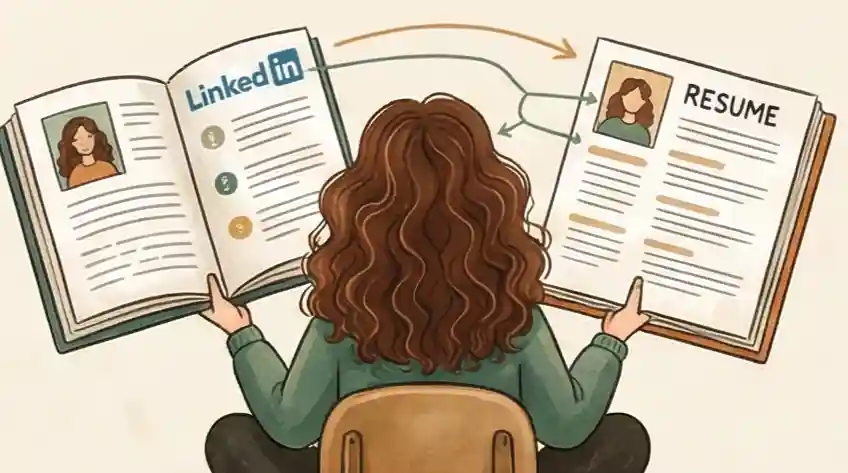
Change how you talk about your values in your resume and LinkedIn profile. Explain that your commitment to honesty actually prevents big money losses from bad press, reduces high employee turnover, and builds a brand that customers trust for longer. For practical framing guidance, see how to align your resume and LinkedIn profile around your professional values.
On your LinkedIn "About" section, mention the kind of "difficult team issues" you solve; this attracts companies that need a moral guide, not just a manager.
In interviews, companies use friendly talk to hide the fact that their actual bonus plans reward bad behavior.
Perform an "Integrity Check" by asking the interviewer to describe a time the company chose to lose money rather than break a core value. Ask directly how "quiet" work, like coaching or following rules, is paid for compared to raw sales numbers.
Ask to speak privately for 15 minutes with someone who would report to you; if they describe how the company really runs differently than the CEO did, you have found a major gap in honesty.
How to Find Companies That Actually Match What You Believe
The secret truth is that most people are afraid that saying they have strong values will make them seem like too much trouble to hire.
When looking for a job, there is huge pressure to just agree with everything. You push down your gut feelings about bad work places because you worry that if you truly check the company, you might lose out on the job offer. You end up giving up your beliefs just to feel safe about getting a paycheck.
"Every company has values listed online, but I'm more interested in how they act when things get hard. Can you give me an example of a time the company had to say no to a profitable deal or slow down a project specifically because it went against their core values?"
Why this works (and how to prepare your answers): read how to use a company's values to frame your interview answers.
- It reveals "Surface Values": If they can't name a single sacrifice they made, their values are just for show.
- It gives you control: It shows them you are a skilled candidate who has high standards.
- It finds the "Hidden Rule": Listen for the word "but" (e.g., "We value balance, but when a client emails late, we all respond right away.") That "but" is the real value of the company.
Think of your personal values as money in the bank. Every time you work for a company that ignores your values, you spend some of that money. When you run out, you suffer burnout. Don't spend your "Identity Savings" on a company that won't even tell you how they handle a tough situation.
Cruit Tools for Matching Your Beliefs
For Looking Inside Journaling Tool
Helps you avoid mistakes like confusing a "nice office" with true belief alignment by creating your list of "Must-Haves."
For Showing Values Publicly LinkedIn Profile Maker
Helps you talk about your ethics using business terms like "Risk Management" and "Long-Term Profit" so you attract important roles.
For Testing Claims Interview Prep Tool
Practice your "Integrity Check" questions to find out the high-risk lies a company might be hiding before you accept a job.
Common Questions
Should I expect every company to perfectly match my values?
No company is perfect, and looking for a "perfect place" will just make you feel tired.
The goal is to find Action Compatibility. You are looking for a system where the unavoidable problems and mistakes do not break your most important rules.
Use your sharp eye to decide if the company's problems are just normal challenges or deep, basic lies. You can lead through the first kind, but the second kind will break you.
Can I actually change a company's culture from the inside?
This is a common mistake for experienced leaders.
Even if you can guide your own team, you cannot easily change the "internal incentives"—which means how the company actually pays people and gives them power.
If the top leaders and the payment system reward actions that go against your morals, you won't change the culture; the culture will eventually force you to be the public face of its failures. Don't join just to fix the foundation; join a place that already has a solid base.
Will asking tough values questions scare off good employers?
It might scare away the wrong employers, and that is actually the goal.
Serious companies respect candidates who treat the interview like a business check-up. When you ask about how they handle money and ethical problems, you show that you are an expert who understands the seriousness of your own leadership role.
This level of detailed questioning doesn't make you "troublesome"—it marks you as a professional who cares more about long-term stability than a quick job.
How do I identify my non-negotiable values before job searching?
Look at the last three times you felt genuinely drained at work. That feeling often signals a direct conflict with one of your core values.
Write down five values, then cut to three non-negotiables. These are your floor conditions: the lines you won't cross regardless of compensation.
Define each one as a specific behavior you expect to see in a company, not just a word on a careers page. "Transparency" means nothing; "all salary bands are posted internally" is a testable standard.
What questions reveal whether a company's stated values are real?
Ask about a specific time the company said no to a profitable deal because it conflicted with a core value. No example means their values are decoration.
Also ask who got promoted in the last two years and why. The promotion pattern tells you what the company actually rewards. That's a cleaner signal than any mission statement.
Finally, ask to spend 15 minutes with someone who would report to you. If they describe how the company runs differently than the CEO did, you've found a meaningful gap.
Demand real operational honesty.
Finding a job that matches your beliefs isn't about looking for a fresh start; it's about using your most important skill: your ability to see past the public relations and check how a business truly functions. Your years of experience should protect your reputation from bad workplaces. Stop looking for a job that just "feels good" and start demanding a system with real operational honesty.
Start Your Check