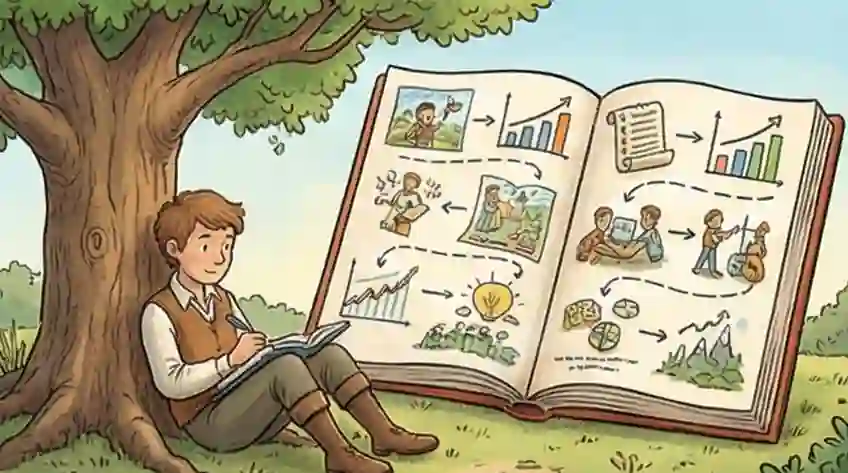
Important Next Steps After an Interview
Record every detail right after the call finishes. Your memory fades fast; the exact way a question was phrased or a small clue about the company culture can disappear in hours. Write down the facts before your brain changes them into a simple "good" or "bad" story.
Every question an interviewer asks shows what the industry values right now. If different companies ask about the same skill, that is a signal from the market. Track these patterns in your notes to learn exactly which abilities you need to gain to stay competitive.
Find the exact moment you felt defensive, unsure, or unclear. Don't see these as mistakes; see them as "problems" in your approach. Once you label these difficult spots, you stop feeling bad about them and start planning how to fix them next time.
Don't see an interview as just a single tryout. Use your notes to create a permanent record of what is happening in your industry. Even if you do not get the job, the information you gathered about what companies struggle with and what hiring trends are helps ensure you never leave a meeting without learning something valuable.
Looking Closely at Career Interviews
The biggest cost to your career is acting like an interview is just something you do and then forget. Most people think of hiring like an old-fashioned test: you show up, try to pass, and when it's over, you forget the details. If you get the job, great. If not, you consider the whole thing a waste of time. This way of thinking throws away important moments, leaving you with nothing but a "yes" or a "no."
The job market is shifting faster than most people realize. According to the Bureau of Labor Statistics (2024), median job tenure dropped to just 3.9 years, the lowest point since 2002. With roles turning over that quickly, an interview is no longer just something to pass. It is a high-value mission to gather information. Every question a hiring manager asks is a direct hint about which skills are growing in demand and which are fading. If you aren't writing these hints down, you are losing the exact information you need to succeed in the coming years.
To stay ahead, you need to build a new type of professional value: Knowledge about the Market. A post-interview journal turns you from someone trying to get approval into a smart planner watching an event. This habit converts every talk into a lasting asset. You stop guessing what people want and start owning the facts that shape your future. Your journal entries also feed directly into writing a stronger post-interview follow-up email, since you'll have the details fresh.
What Is a Post-Interview Journal?
A post-interview journal is a written record you create immediately after every job interview, capturing the questions asked, your responses, the company's pain points, and your own emotional reactions. It turns a one-time event into a permanent career asset you can study and build on.
Unlike generic interview prep notes, a post-interview journal works backward from the real conversation. You record what actually happened, not what you planned to say. Over multiple interviews, these entries reveal patterns in what the market values, where your stories land well, and which skills you need to develop. The journal becomes your personal database of career intelligence. If you're also looking for ways to use journaling for long-term career growth, see our guide on keeping a career journal for professional development.
Change in View: From a Quick Deal to Gathering Information
The main change is how you see professional talks: stop seeing them as a one-time test and start seeing them as ongoing, smart research. This change turns pressure into curiosity.
Main Goal: The Quick Deal: Treating the meeting as a one-time "pass or fail" check you have to get through.
Feeling: The Subject: Feeling like a student being graded, which causes worry or relief.
Information: Disposable: Letting the exact questions and details go as soon as you leave.
If They Say No: Total Loss: Thinking the time was wasted and that you failed personally.
Main Goal: Gathering Market Facts: Seeing every meeting as research to learn what the industry cares about.
Feeling: The Observer: Acting like a scientist tracking facts to see how the job world is changing.
Information: Building Up: Writing notes to build a permanent collection of competitive knowledge.
If They Say No: Smart Gain: Seeing a rejection as a lesson you paid for with your time, which makes your next plan better.
The Career Information System
To change from someone who just seeks jobs to a smart planner, you need to use The Career Information System. This plan turns every interview from a hard test into an easy research mission.
Part 1
What it is: Quickly writing down every question asked, who the interviewers were, and the exact problems the company talked about.
Why it matters: This stops you from forgetting details while they are fresh. As this collection grows over time, you create your own list of real-world questions, letting you predict what future employers will ask before you meet them.
Part 2
What it is: Objectively looking at your answers to see which stories worked well with the listeners and which ones didn't get across.
Why it matters: This moves you from just worrying if they liked you to actually checking if your message was effective. It lets you improve your professional story after every talk, making your "sales pitch" better each time.
Part 3
What it is: Looking at the main ideas and needs that kept coming up during the interview, no matter what the job description said.
Why it matters: This finds the "hidden" skills and tools that the industry currently values, which are often different from the written job post. Understanding these hints lets you change how you train and present yourself so you are always selling what the market is actually buying.
The way to use this is built right in: keep capturing the situation, check your answers, and analyze the Industry Temperature after every professional talk. This builds useful, up-to-date information about your career world.
The Career Information System Tools
1. Capturing the Situation
Note-Taking ToolBuild your private library. The AI helper breaks down talks, pulls out skills, and makes a searchable history of information.
2. Checking Your Answers
Interview Practice ToolA testing lab to fix weak stories using proven methods like STAR, so you can make your pitch better every time.
3. Checking the Industry's Temperature
Job Review ToolFind hidden skills. Compares what you wrote on your resume to what came up in interviews to show you where you need to improve.
Common Questions
How soon after an interview should I write notes?
Write your notes within 15 minutes of the interview ending. Treat it as a fast "brain dump," not a writing assignment.
A Harvard Business School study found that people who reflected on a task performed 23% better in the next round than those who skipped reflection. Capturing your thoughts while the details are clear means even a failed interview helps your future self.
Should I journal after a bad interview?
A "bad" interview is often the best source of market information.
Writing notes helps you stop feeling bad about rejection and start planning how to improve. When you write down exactly where the conversation got stuck, you replace the pain of failure with a clear list of skills the market currently needs.
What should I write in my post-interview journal?
Focus on three main areas: the questions they asked that surprised you (market changes), the exact "pain points" the company mentioned (gaps in their knowledge), and how you personally felt (where you were confident versus unsure).
This creates your own private library of career facts. Instead of guessing what recruiters want, you build a record of exactly what they are asking for right now.
Can I use my phone to journal after an interview?
Yes. Use whatever tool is fastest: a notes app, voice memo, or even a text message to yourself. The format matters less than the speed. The goal is to capture raw details before your memory edits them into a simpler "good" or "bad" story.
How many interviews before the journal shows patterns?
Most people start noticing useful patterns after 3 to 5 entries. You might see the same skill mentioned across different companies, or notice that your answer to a specific type of question keeps falling flat. These patterns help you focus your preparation on what the market cares about.
Is a post-interview journal useful for internal promotions?
It works for any professional conversation where you are being evaluated: internal interviews, skip-level meetings, and performance reviews. Recording questions, feedback, and your own reactions helps you build a clearer picture of what your organization values and where you stand.
Our Belief
You are no longer just someone looking for a job who has to wait for approval; you are the leader of your own professional information. Keeping notes after interviews helps you master the shift from temporary job-seeker to permanent market strategist. This habit makes sure no talk is wasted and no rejection is a total loss. You aren't just looking for a job. You are recording the future of your industry.
"Stop treating your career like a series of performances and start building your own information base."
Focus on what is important.
Managing your career today needs smart planning. Cruit gives you tools run by AI to handle these tasks, so you can focus on building a career you enjoy.
Start Building Now