What You Should Remember
-
01
The 90/10 Rule Talk about your many years of success 90% of the time, and only 10% of the time discuss the details of your time away. Always emphasize your long track record first; treat the break like a small, unimportant detail. If you treat the gap as a major issue, everyone else will too.
-
02
The Outsider Advantage Don't present yourself as someone struggling to get back in. Show that you are a high-level thinker who stepped back and gained a clear, outside view that people stuck in their daily jobs don't have. You are not catching up; you are bringing a new, big-picture viewpoint they really need.
-
03
Gap-Mapping AI Use AI tools to update how your past skills sound in today’s business language. Put current job descriptions into an AI to find the new names for your old skills. This immediately makes your experience sound current and technically relevant, fixing the feeling that your expertise has faded.
-
04
Peer-Level Entry Avoid standard online job applications that use computer programs to punish you for career gaps. Contact former coworkers who are now managers or leaders directly. They remember how well you worked and are the only ones who can ignore the tendency to offer you less money or a lower title, letting you get a job based on your real worth.
Simple Steps to Return to Work for Experienced People
Most advice tells you to treat returning to work like a "new start," as if your time away erased all your past achievements. If you have a lot of experience, this is the worst way to think. You are not a beginner, and acting like one tells the job market that you are worth less now.
Returning to the workforce after a career break means re-entering paid employment after a deliberate pause, whether for caregiving, health, personal development, or other life priorities. The challenge isn't your skills. It's how the hiring market perceives a gap on paper. Done right, your return positions you as a senior professional with both depth of experience and a fresh outside perspective.
This is the "Experience Paradox": your ability to make good decisions has probably gotten better over time away, but the job market worries about your skills being old ("Authority Decay"). They assume that because you weren't working daily, your knowledge is no longer useful, so they will try to offer you less money or a lower job title ("Status Discount") just to get you to prove you are still capable.
The bias is real and documented. According to research from Harvard Business School (2021), between 43% and 48% of employers automatically rejected qualified candidates who had a gap of six months or more on their resume. That's not a skills problem. It's a perception problem you can solve with the right strategy.
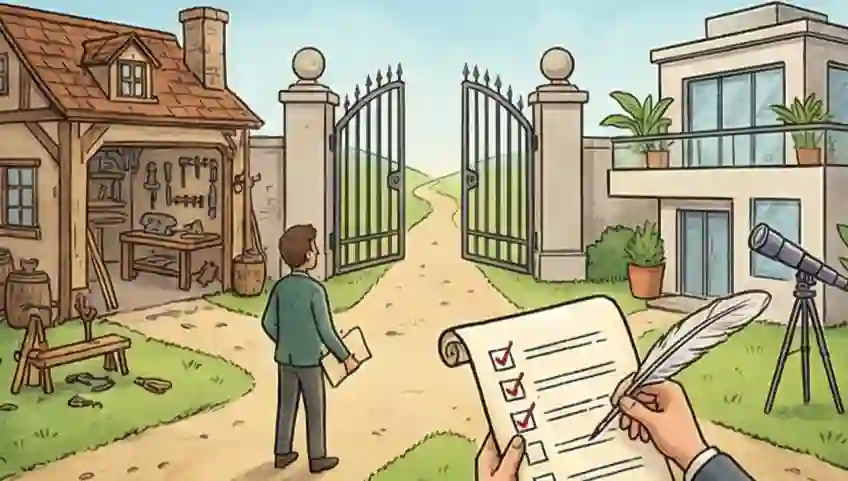
To avoid this trap, stop seeing your break as time off and start practicing "Strategic Decoupling." You are not someone trying to get back in. You are a leader who stepped back to gain a "better view" that people who never left, stuck in the daily grind, have lost.
The Way to Return Based on Your Situation
You are now using a method called "Contextual Re-entry," which means you offer the job market a rare mix: deep experience plus a fresh, clear point of view.
- This blog is not just general advice about resume gaps.
- It is a practical set of tools for top-level performance.
- It gives you the exact plan needed to return to work at the salary and title you deserve.
- The main goal: to make sure you never have to pay a penalty just because of the time you took off.
The Senior Professional's Return Check: Stop These Three Things Right Now
If you are an experienced person coming back to work, your biggest problem is not the time you missed; it's how you act. The job market can sense nervousness, and if you act like you've fallen behind, they will treat you like a cheap deal. Stop asking for permission to be important again. To get your high-level position back, you must check your approach and immediately get rid of these three habits.
You treat your break as a mistake you need to explain deeply. You spend the first part of an interview talking about family needs or health, hoping the boss will feel bad and "look past" the empty spot on your resume.
Use Strategic Decoupling. Stop explaining why you left and start explaining what you learned while you were gone. Say you took a "Break for a Better View." You are bringing a fresh, clear viewpoint that people stuck doing daily tasks have lost.
You worry that your skills are now old news. You spend months getting basic certificates or learning the newest buzzword software just to prove you are still capable. This actually tells them you’ve dropped from being a leader to just a doer.
Focus on Big-Picture Thinking. Your value isn't in pushing buttons; it's in knowing which buttons to push and why. Remind the market that tools change often, but the ability to make major decisions gets better with experience. That is a permanent, high-value skill.
Because you fear not being hireable, you apply for jobs that are below your last position. You tell yourself you will "climb back up" or take less money just to start somewhere. This confirms the market’s fear: that your past importance has gone down in value.
Keep Positioning Based on Value. If you apply for a mid-level job, you will be managed like a mid-level person. Look for jobs that need the "Rare Mix" of senior skill and a fresh view. If you don't value your past decade of work, no one else will.
The Plan for Returning: From Gap to Better Viewpoint
You feel nervous that the time you took off has lowered your value as a professional, making you feel like you are starting over.
Do a "Better Viewpoint Check" to connect your past success with what you see now. Don't see your break as empty time. List the insights you gained about your industry while away from the daily grind, and match those observations to the big problems companies face now. This shifts your thinking from "looking for a job" to "offering a rare, fresh view."
Never start by apologizing for the time you missed. The moment you excuse the gap, you signal to the employer that your experience is worth less.
The job market thinks your high-level knowledge has gotten old and that you don't know the latest trends or tools.
Update your online presence using Strategic Decoupling to show your break was a planned step for growth. Update your LinkedIn and resume to demonstrate "active authority" by sharing 2–3 substantive thoughts on what's happening in the industry now. A Korn Ferry study found that 62% of employees worldwide have taken a career break, and 74% of those who return believe employers valued the perspective they gained during that time. This tells recruiters you aren't just "coming back," but re-entering with a sharper view than those who never left.
Use your LinkedIn title to show your current "Strategy Advisor" status instead of leaving it empty. This keeps the search programs—and the recruiters—focused on your active value.
You worry about the "Status Tax"—the high chance of being offered a lower title, less pay, or a job reporting to someone you used to manage.
Approach interviews as a partner ready for Contextual Re-entry, not just someone asking for a job. When they try to offer you a lower rank, shift the talk to the high-level dangers you can help the company avoid because of your seasoned wisdom and clear view. Negotiate for "Impact Titles" (like Senior or Lead) that show your seniority even if the daily tasks are a bit different from before.
If a company is unsure about your seniority, suggest a 90-day "Strategy Plan" project to prove your value at the highest level before they decide on your final job title.
The Hidden Truth About Returning to Work After a Break
When you've been away from the office, you walk into interviews feeling like you owe everyone an apology. You feel like you are flawed and need to explain away a mistake.
The "Hidden Truth" is the idea that a career break means your skills have gotten weaker, not just that you focused on something else. Because you feel bad about the gap, you start with excuses, which makes hiring managers secretly agree that your skills have "run out."
"I stepped away to focus on [my children / a family health issue / travel]. It was a planned choice that let me focus on those things completely. During that time, I kept up with the business by [mention one thing you read or followed], which actually gave me a fresh look at how the market is changing. What I see now is that my past skill in [Your Core Skill] is exactly what is needed to fix [Specific Problem the Company Has]. I am coming back with more focus and energy than I had five years ago because I know my purpose much better now."
Stop seeing your break as a hole in your resume that you must cover up. Instead, see it as a bridge you built to get to this exact moment. Taking ownership of your time off as a deliberate, high-level life choice shows you are still in control of your career, not someone trying to hide something.
Cruit Tools for Returning to Work
For Finding Your Way
Career CheckSolves the "Internal Check" issue by finding your hidden strengths and skills you gained from your time away.
For Your Image
LinkedIn ProfileCreates an AI story that shows your break as smart growth, telling recruiters you still have important knowledge.
For Talking Money
Interview PracticeHelps you practice high-level answers to avoid getting a lower salary offer and help you get the right job title.
Common Questions
What do you say to a recruiter about a career break?
Don't get defensive or offer to take a refresher course. Shift the conversation from tools to judgment. Software versions change; the ability to solve complex problems and lead teams does not. Tell recruiters your time away gave you a "better view" that let you see industry changes more clearly than people buried in daily tasks. Your value is in your judgment, not which app version you know.
Should I accept a lower salary when returning after a career break?
No. Research from the Institute of Fiscal Studies shows that women face approximately a 2% hourly wage reduction per year of career break, rising to 4% for highly qualified professionals. Accepting a below-market offer compounds this penalty for years. Remind companies that you bring both seasoned experience and a fresh perspective. If you accept a lower title, you confirm their assumption that your seniority has expired.
How do you explain a career break for family reasons?
The reason matters less than how you frame what you gained. You don't need to share personal details beyond what's comfortable. Use Strategic Decoupling: stepping away gave you mental space to return with more clarity than someone who has worked non-stop. Whether you were raising children or caring for a parent, you now have a re-entry advantage. You know what matters most, and that focus is rare.
How long is too long for a career break?
Harvard Business School research found that nearly half of employers begin filtering out candidates automatically once a gap reaches six months. The longer the gap, the more proactive your positioning needs to be, not more apologetic. A two-year break with a confident narrative often lands better than a six-month break with constant hedging. The length of the gap is far less important than how directly you own the story.
Is it better to go back to the same field or switch careers?
Returning to a familiar field is faster because your network already exists and your credentials are recognized. Switching careers during a return adds two challenges at once: explaining the gap and proving new-field fit. If you want a career change, get some traction back in your existing field first, then pivot from a position of strength. That said, if your break was triggered by burnout from your old field, forcing a return to it rarely works long term. See our guide to navigating a career change after 40 for a deeper look at making that transition successfully.
Do I need to update my skills before applying after a break?
For technical roles, a targeted skill update (not a full re-certification) can help signal currency. For leadership, strategy, or management roles, chasing every new tool is often counterproductive. It signals you've dropped from leader to learner. Your value at senior levels is judgment, not familiarity with the latest platform. Use AI tools like Cruit to map your existing experience to current job descriptions and identify the precise gaps, rather than guessing what to study.
Your Break Was An Investment In What You See
Your break from work was not stopping your value; it was spending time to improve your point of view. By using Strategic Decoupling, you change what the job market sees as a gap into a strong advantage.
Your years of experience didn't disappear—they got better. Don't let the fear of skills fading trick you into accepting less money or a lower job title. You are coming back with a unique better view that lets you see the big picture better than ever. You are not just back; you are improved.