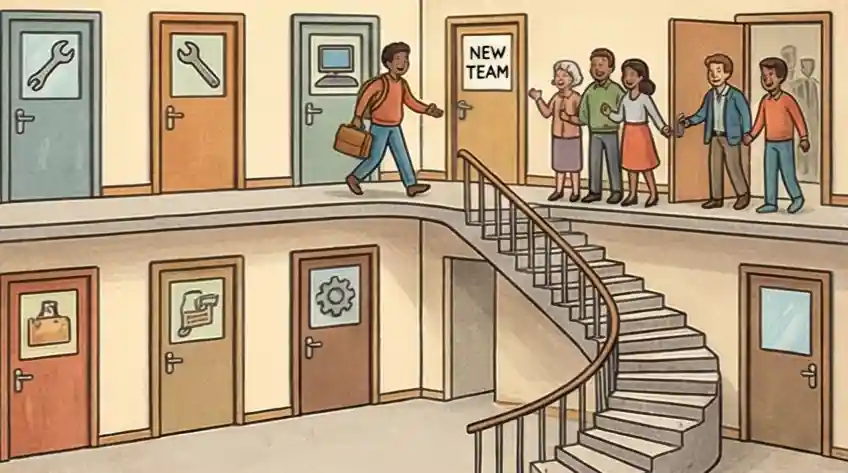
What Is a Boomerang Employee?
A boomerang employee is someone who leaves a company and later returns to work there again, typically after gaining experience elsewhere. Rather than a sign of failure, the return is increasingly seen as a strategic career move that benefits both sides.
According to ADP Research, boomerang employees made up 35% of all new hires in March 2025, up from 31% the prior year. In the information sector, nearly two-thirds of new hires in that same month were returning employees. The trend reflects a shift in how employers think about talent: former staff are no longer a closed chapter but a standing resource.
New Rules for Today's Returning Professional
See every time you quit as a change in status to "Alumni," not a final breakup. In today's job world, your old boss might become your next boss or recruiter. Leave with a good name and keep the door open. Your leaving is just a chance to gather new knowledge.
Don't come back as the same person who left. Your real worth is the "new skills" you gained while you were gone. When asking for your old job back, explain that your time apart was a smart move that gave you fresh ideas for old company issues.
Don't waste the first 90 days learning everything again. Use what you already know about the company's inside workings to be effective from day one. Since you already understand the people and the office vibe, you can skip the slow start that new people always have.
Don't think going back is taking a step down. Careers are not straight paths anymore; they are connected systems. Going back to a place you know well isn't settling; it's a smart move based on perfect information. If the company helps you grow, returning is a powerful move, not a defeat.
The Value of Your Professional History
The biggest mistake people make in a modern career is acting like quitting a job is a final goodbye. For a long time, we were taught that leaving a company meant burning the bridge behind you. Older ways of thinking saw someone returning to a former job as proof they failed or couldn't find anything better. This view treated your past work experience like something you throw away the moment you leave. It forced us to see our careers as a straight path where stopping or turning around meant you were failing.
But the time of staying at one company forever is over. Now, we are in the age of the talent network. Smart companies are realizing they can't own people forever. Instead, they are creating networks of former employees (alumni). In this new world, someone coming back is a major improvement. They bring new information from the outside and new skills to a place they already understand.
This trend has created a new valuable thing: Professional Equity. When everything feels uncertain, the riskiest thing is not knowing what you're getting into. Hiring a stranger is a guess, but hiring someone who has already worked there is a proven asset. When you go back to a former role but with more experience, you aren't taking a step back. You are using your history to speed up your future, making your past connections your biggest advantage.
The boomerang hire trend is accelerating. Research from ADP (May 2025) found that 35% of all new hires in the United States were returning employees — people going back to a company they had previously left. That share has climbed steadily from 27% in 2018, suggesting that the stigma around "going back" is disappearing at scale.
The Big Change: From "Burning Bridges" to "Boomerang Hires"
How companies see former employees is changing a lot. They used to see people leaving as a final loss. Now, they see them as useful parts that can strategically come back later.
Career View: A straight line: Leaving means a "final goodbye." Returning means you failed or stayed the same.
Hiring Value: The Familiar Face: Hiring someone because they are safe and easy, not because they are the best option available.
Risk Level: Big Guess: Hiring someone new based only on a nice resume is a huge gamble for the company.
Speed to Success: Slow Progress: New hires spend months just figuring out how things work and fitting in.
Career View: The Talent Network: Leaving is a break. Returning is a smart upgrade for both the person and the company.
Hiring Value: The Knowledge Boost: Hiring a "proven good worker" who brings back fresh skills and competitive secrets learned elsewhere.
Risk Level: Perfect Knowledge: Both sides know exactly what to expect about work ethic and culture, so there are no surprises.
Speed to Success: Fast Start: Former employees start working at full speed right away because they already know the company's core.
The Mutual Benefit Plan
To help you switch from the "One-Way Bridge" idea to the "Smart Upgrade," use The Mutual Benefit Plan. This four-step plan changes the view from just "re-hiring" to having a smart plan for talent.
Part 1
What it is: The habit of staying in touch positively with former employees as part of an "Alumni Group."
Why it matters: By keeping the relationship alive, you turn someone leaving from a permanent loss into a long-term asset. This makes sure that good workers can come back without feeling like they failed somewhere else.
Part 2
What it is: The way you look for and value the new skills, outside knowledge, and different ideas an employee gained while they were away.
Why it matters: A returning employee is a "smart upgrade" because another company paid for their recent professional training. They come back with the same basic company understanding but with new tools to fix problems they couldn't solve before.
Part 3
What it is: Using shared history to remove the "Information Gap," meaning both sides are honest about work ethic and office culture.
Why it matters: Hiring a stranger is a risk, but hiring a former employee removes the "hidden problems" of fitting in and performing well. This shared certainty makes both the company and the employee feel safe to commit fully from the start.
This plan helps you get results faster by using the returning employee's existing knowledge of company processes and people to skip the usual getting-started time. While a normal new hire might take six months to work well, someone coming back can be fully effective much faster. This quick start saves the company money and keeps work moving ahead. If you are also considering a move within your current organization before looking externally, read our guide on how to make an internal career move first.
Cruit Tools: Built on the Mutual Benefit Plan
For Keeping Connections
Networking ToolAutomatically reaches out to keep your "Alumni Group" active, writing personal messages to keep professional links as ongoing assets.
For Increasing Value
Career Check ToolFinds your "hidden strengths" and skills you gained while you were away, proving you are a smart upgrade for your old job.
For Making Sure Both Sides Match
Interview Practice ToolUses an AI helper and practice drills to help you tell stories about your growth, removing all "Information Gaps" for the hiring manager.
Common Questions
Will colleagues think I failed if I return to a former employer?
No. Returning is seen as a good sign in today's job market. It shows the company valued you and that you were smart enough to gain skills elsewhere and bring them back. Most managers prefer hiring someone they already know over taking a chance on a stranger.
Is going back to a former company a step backward?
Only if you return to the exact same role for the same pay. A smart boomerang move means a better title or higher compensation. You are using your history to jump ahead faster, not going backward.
How much faster do boomerang employees get up to speed?
Research shows returning employees reach full productivity about 33% faster than brand-new hires. Because you already know the culture and internal processes, you skip months of onboarding confusion and start contributing almost immediately.
What percentage of new hires are boomerang employees?
According to ADP Research, boomerang employees made up 35% of all new hires in March 2025, up from 31% the year before. In the information sector, that share reached nearly two-thirds of all new hires — a two-fold increase from a year earlier.
Should I ask for a higher salary when returning to a former employer?
Yes. Negotiate from a position of strength. You eliminate onboarding risk for the employer, you bring outside knowledge they cannot get from an internal promotion, and you already know how to perform in their environment. All three factors justify a higher starting salary.
How do I bring up returning to a former employer?
Reach out to your former manager or a trusted contact directly. Frame the conversation around what you learned since leaving and how those skills address a current challenge the team faces. Do not frame it as needing a job — frame it as bringing something new back.
If you are returning after a longer career gap, your resume will need to frame that time strategically. See our guide on crafting a returnship resume to position the gap as an asset.
Our Core Belief
You are no longer just an "ex-employee" looking for comfort. You are the manager of your own Professional Equity. By returning to a former job with new knowledge from the outside, you become a "smart partner" in your network of past colleagues. You are not falling back: you are using your history as your best tool in a world full of uncertainty.
Stop treating your past as something closed off and start using it as your strongest advantage.
Take Charge of Your Career