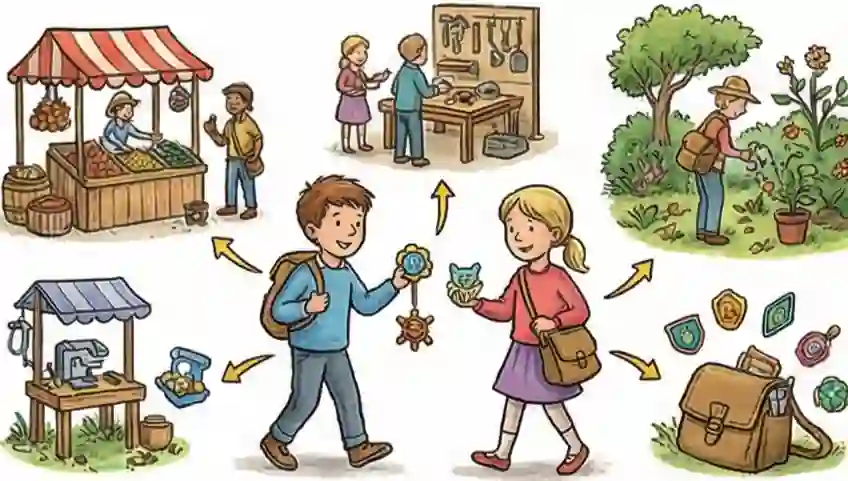
Small Project Rules
-
01
The 3-Day Limit Give yourself only three days to finish every tiny project. This forces you to concentrate only on the most important part of the skill, instead of getting stuck on tiny, unimportant details.
-
02
Mixing Tools Use two different, unrelated software tools together in one small project. This proves you can connect different ways of working or different teams.
-
03
Proof of Work For every small task, show a clear "Before" and "After" picture. This gives future employers clear proof of how you solved a problem.
-
04
Connecting the Dots Put three small, completed tasks together—like writing a title, making a picture, and setting up a post—into one quick campaign. This shows you can handle a project from start to finish.
The Mental Block from Not Doing
You might be a boss during the day, handling budgets and teams perfectly. But late at night, you're stuck on a simple data task that won't work. You feel that uncomfortable heat—it’s the frustrating feeling of a skilled person having to work like a slow beginner. This is mental drag, and it feels embarrassing, like going backward.
To get rid of this bad feeling, you might start taking another online course. You gather digital badges like armor, thinking a finished video means you mastered the skill. But learning without doing is weak; it gives you the right words but none of the actual experience. According to the World Economic Forum, 39% of workers' core skills will need to change by 2030—making the ability to pick up new things quickly one of the most important career assets you can have.
The real way forward is to stop hiding in classrooms and start building "micro-experiences"—small, real tasks that prove you can actually solve problems instead of just passing tests. If you are working toward a portfolio career, micro-experiences are the building blocks of that strategy.
What Is a Micro-Experience?
A micro-experience is a short, self-contained project completed in one to three days that forces you to apply a new skill in a real context. Unlike a course, it produces something concrete: a working tracker, a cleaned dataset, a published post.
Professionals use micro-experiences to bridge the gap between knowing something in theory and being able to prove it under pressure. Each small project adds a verifiable entry to a skill portfolio that speaks for itself in job applications and promotion conversations. Research shows hands-on practice achieves retention rates up to 90%—compared to just 10% from passive listening, according to adult learning retention studies.
The Expert Lens: Tactical Action vs. The Certification Loop
There is a massive difference between Tactical Action (building something real, even if it’s small and ugly) and The Certification Loop (collecting digital badges to hide the fact that you’re scared to start).
Collecting digital badges to hide the fact that you’re scared to start. It feels safe because you can’t "fail" a video course, but certifications don't build "Practical Confidence"; they just give you a false sense of security while your skills stay frozen in theory.
Stopping reading and starting doing. This means the Mid-Manager builds a simple automated tracker, or the Specialist actually cleans one messy spreadsheet, building "Practical Confidence" through real-world execution.
If you find yourself constantly needing to "reset" your mindset or are stuck in a cycle of buying new courses to feel productive, the problem isn't just you; you might be in an environment that punishes the "clumsiness" of learning.
You cannot "manage" your way out of a dying career path if your environment refuses to let you be a beginner. If your job makes you feel guilty for building micro-experiences, you are tolerating a toxic situation, and it is time to stop "managing" your survival and start planning a strategic exit.
How to Use Cruit for Real Career Steps
To Find Projects Job Analysis Tool
Compares your resume to job listings to show you exactly which skills you are missing and suggests small projects to cover those gaps.
To Track Your Work Journal Tool
Record your project progress and wins as they happen. Our AI assistant analyzes your notes and automatically labels the skills you used, both technical and soft skills.
To Use Your Wins Resume Writer Tool
Turns your rough notes from small projects into strong, achievement-focused sentences for your resume using smart follow-up questions.
Questions Answered: Dealing with the Struggle
Is it faster to learn through small projects than following an online course?
No. A course seems faster but often leads to wasted time later.
Small projects are smart because they mix learning with actually making something. Spending ten hours struggling to complete one tiny, working project teaches you more than forty hours of just watching videos—because the struggle itself forces retention.
Do small projects count more than certifications to employers?
Yes. Managers are tired of people who only know the theory but can't actually do the work.
A certificate just proves you showed up; a small project proves you can get things done. Proof of work always beats proof of attendance because it shows you have the drive, the thinking skills, and the ability to deliver results when things are tricky.
How long should a micro-experience project take?
Aim for three days or less. This time limit forces you to focus on what matters most.
One afternoon to three days keeps the project small enough to finish, which matters more than making it perfect. The 3-Day Limit in the rules above exists for exactly this reason: concentration beats comprehensiveness when you are building a new skill.
What counts as a micro-experience for my portfolio?
Any real task where you applied a new skill and can show a before-and-after result.
That could be a cleaned spreadsheet, a short automated report, a redesigned slide deck, or a written analysis. If you built something and can point to the result, it qualifies. Once you have three of these, you can string them into a mini-campaign—the "Connecting the Dots" rule at the top of this post.
Can I build a skill portfolio without leaving my current job?
Yes. Micro-experiences work best when they connect to your existing role.
Look for a recurring task you already handle and do it using the new skill you are building. You get real practice, the output is useful at work, and you do not need side projects or extra hours. If you want a full system for learning a new skill while working full-time, that guide walks through scheduling and prioritization. Once you have built these projects, you will want to talk about them in interviews—read our guide on how to describe a time you had to learn something new quickly.
Build Skills That Stand Up to Scrutiny
Small projects close the gap between knowing something and actually owning a skill by forcing you to solve real issues. This hands-on way replaces the fake safety of digital badges with the real confidence of someone who actually builds things.
Start Building Today