Things to Remember for Your Career
Set clear times when you start and stop responding to work messages so people respect your personal time. This creates a healthy routine that keeps you energized and stops top performers from quitting due to exhaustion.
When asked to do something new, don't just agree. Show people what you are currently working on and ask them to help you decide what to delay. This shows you think strategically and care about quality, making sure your best efforts go toward the tasks that truly matter for your next promotion.
Never start a task without knowing precisely what success looks like and when the deadline is. This stops work from getting bigger and bigger, ensuring you don't waste hours on extra things nobody asked for, which protects your schedule for getting important things done.
Controlling Your Professional Limits
What Are Healthy Work Boundaries?
Healthy work boundaries are clear, communicated limits around your time, attention, and availability that protect your capacity to do your best work. They aren't about doing less — they're about directing your energy toward work that actually matters, so you stay productive and avoid burning out.
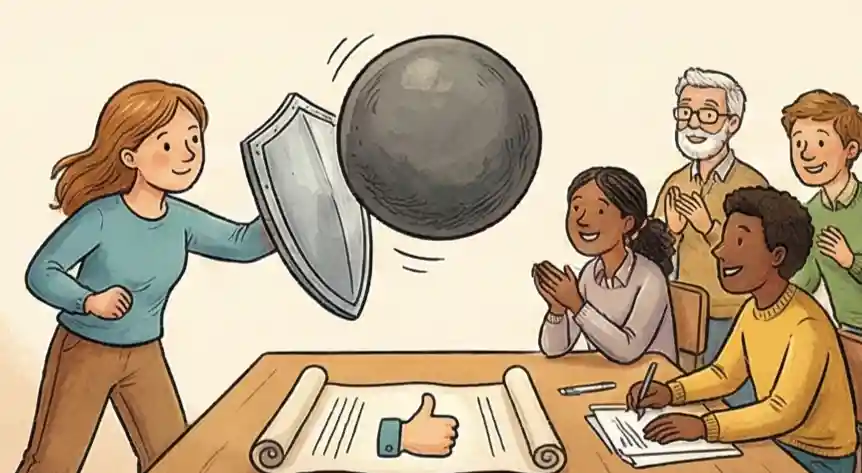
The habit of "politely saying no" is actually hurting your career. In demanding jobs, simply saying "no" doesn't work because it treats your time like a personal favor instead of a valuable work resource. This gentle approach leads straight to the "Shadow Work Trap" — where tasks you refused keep coming back as "quick questions" or messages over the weekend.
The consequences are measurable. According to a 2024 Wellhub study, 77% of employees are asked to take on work beyond their job description at least weekly, and 43% reported their stress levels increased year-over-year. That's not a workload problem. It's a boundary problem.
To get back your advantage, you need to stop just "protecting" your time and start managing your "Work Capacity Budget." Smart workers use openness about what they can handle to turn limits from something emotional into something logical, based on Return on Investment (ROI).
"High performers are respected not for how many tasks they take on, but for what they actually finish. Being transparent about your capacity isn't weakness — it's the language of a strategic operator."
The Smart Switch: A Menu of Choices
- When you offer a "Trade-off Menu," you make colleagues choose which important projects should be done later to make room for their new request.
- This smart switch moves the job of deciding priorities away from your personal willpower and back to the organization.
- It makes your limits enforceable using clear facts instead of needing permission.
How to Upgrade Your Personal Work System
As someone who manages technical products, I look at personal work systems like different versions of software. To stop yourself from burning out, you must move from just fixing problems as they happen to having smart systems in place. The following chart compares three levels of setting boundaries to help you see where you are now and where you need to improve.
Level 1: Basic (The Starting Point)
If You Are Doing This:
- Turning off work notifications after 6 PM.
- Setting a time you absolutely must stop working.
- Using an "Out of Office" message when you take vacation.
What This Does
Quick Fix: This stops work from spilling into your sleep and rest time. It stops the "always connected" habit, so you start the next day with more energy.
Level 2: Professional (The System)
If You Are Doing This:
- Booking "Focus Time" on your calendar for deep work.
- Asking for deadline changes when new tasks arrive.
- Putting your "Working Hours" in your email signature or Slack name.
What This Does
Predictable Results: By controlling your schedule, you feel less stress from switching between tasks. This builds a name for yourself as someone reliable because you only promise what you can finish.
Level 3: Mastery (The Strategy)
If You Are Doing This:
- Saying "No" to tasks that don't help you reach important goals, so you can focus on the big goals.
- Showing your team how to solve problems without you (Delegating).
- Creating "Team Rules" (like no meetings on Fridays).
What This Does
Being a High-Impact Leader: You stop just "doing more" and start "doing what matters." This saves your mental energy for big ideas and makes you a more valuable employee in the long run.
Summary for Tech People
Main Points
-
•
Basic Level is about surviving—protecting your time.
-
•
Professional Level is about working smart—protecting your focus.
-
•
Mastery Level is about making things happen—protecting your energy for the most important goals.
The System for Long-Term Space
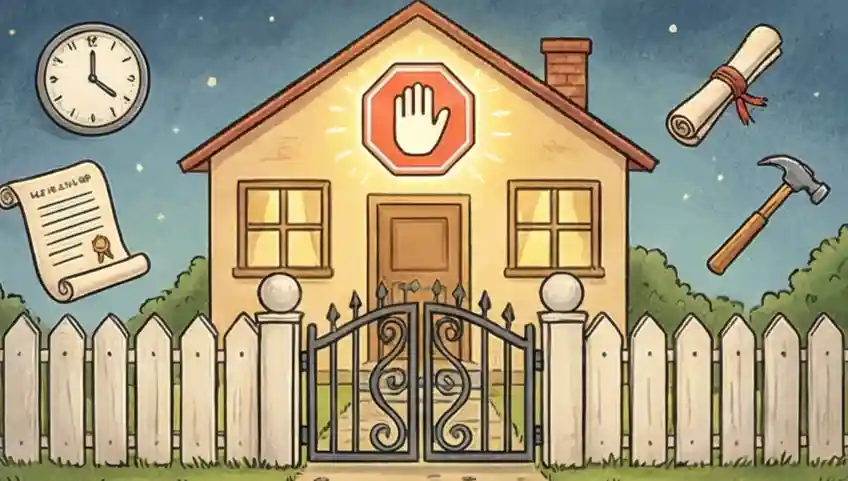
To help people protect their mental energy and keep working well for a long time, I created The System for Long-Term Space. This plan moves from what you think to what you do outside, making sure your limits are not just mentioned, but actually followed.
The Plan Layer
Your Own Rules
Goal: Decide your personal "Hard Stops" before your day even begins.
Action: Figure out three rules you absolutely won't break—like a fixed time to stop work or a lunch break with no meetings—that define a successful day for you.
The Announcement Layer
Telling Others
Goal: Manage what people expect from you by being completely honest.
Action: Clearly state when you are working and how people should contact you in your email signature, status messages, and meeting invites so they know when you are offline.
The Guard Layer
Automatic Defense
Goal: Create real and digital barriers that stop your focus time from being interrupted.
Action: Use "Do Not Disturb" settings and block time on your calendar to automatically protect your focus, making it physically hard for alerts or new requests to break your concentration.
The Plan defines what matters to you internally, The Announcement makes sure everyone else knows, and The Guard enforces protection so that your energy lasts every day.
The Quick Fix for Moving to Flow
Turning daily work annoyances into efficient systems that work automatically. Here is a look at common issues and the quick ways to fix them so you can get into a state of smooth work.
The Notification Cycle: You feel like you must reply to "short" pings on Slack or email outside of work hours just to show you are paying attention.
Batching Communication: Turn off all work alerts at a set time. Use the "Schedule Send" feature for any late-night ideas so they arrive during work hours, stopping a cycle of messaging back and forth 24/7.
The "Small Favor" Overload: Agreeing to small, unrecorded tasks that slowly take up your whole day and force you to work late just to catch up.
The Trade-off Menu: When asked for a "quick favor," reply: "I need to focus on my three main jobs today (List them). Which one should I move to tomorrow so I can fit this in?"
Calendar Chaos: Other people book urgent meetings right over your dedicated time for focused work, leaving you no time to actually finish your projects.
Set Hard Focus Times: Mark your best work times on your calendar as "Private" or "Busy." If someone invites you anyway, send a polite note: "I am focused on [Project X]; please email me the details so I can respond later."
The Unclear Goal: Agreeing to a new project without knowing exactly what success looks like, which leads to the work growing and becoming harder to finish (Scope Creep).
Define What's Finished: Before starting any task, ask: "What does success look like for this, and what is the hard deadline?" If it isn't clearly defined, it doesn't go on your active to-do list.
The 60-Minute Plan to Fix Your Boundaries
For managers, burnout is just poor resource planning. Follow this plan right away to get your time and energy back. According to the American Journal of Preventive Medicine (2025), employee burnout costs U.S. employers an estimated $322 billion annually in lost productivity — a number that drops sharply when people have clearer systems for managing their workload.
Find where your time is leaking, like checking email during family dinner or allowing meetings to overlap with your lunch time.
Decide on three strict limits, such as stopping work exactly at 6:00 PM and blocking off one hour daily for uninterrupted, focused work.
Update your boss and team in your next meeting, using clear words to explain when you are available for requests and when you are not.
Set up automatic "Do Not Disturb" modes on your phone and block out your personal time on your shared work calendar.
Politely say no or reschedule any request that breaks your limits, making sure you keep to the plan starting now.
Get Better with Cruit
For Hard Talks
Career Guidance ToolSetting limits means dealing with tricky office situations. This tool acts like a coach you can call anytime to practice using the "Trade-off Menu" idea.
To Prove Your Success
Journal ToolWrite down your daily wins so you don't forget them when it's time for reviews. The AI Journal Coach helps define success and fights the tendency to only remember recent events.
To Set Limits
Meeting HelperStop letting people book over your time. Use the AI helper to write polite but firm notes for declining meetings and explaining your set working hours.
Answers About Managing Your Capacity
What do I do if my manager says everything on my list is the "top priority"?
If your boss claims everything is urgent, the "Trade-off Menu" becomes even more necessary.
Instead of arguing about which is urgent, ask them to "Rank the Stack." Say, "I see all these things are top priority. Since I can only deliver one great result at a time, which should I focus on first today: Project A or Project B?" This makes your boss accept the reality of your limited work capacity without you having to use the word "no."
Should I use a Trade-off Menu for "quick favors" from coworkers that only take five minutes?
"Quick favors" are the main reason for the Shadow Work Trap. Even if one five-minute task seems small, five of them will break your focus and lead to tiredness.
Instead of just saying "no," offer a "Time Slot" solution. Tell the coworker: "I am in a focused work period for the next three hours to meet our goals. I can look at your request during my wrap-up time at 4:00 PM, or we can discuss it during our regular meeting tomorrow."
Will being transparent about my capacity make me look less capable?
The opposite is true. People respect high-performers not for how many things they "do," but for what they actually "finish."
By openly sharing what you can handle, you act like a smart manager of resources, not just someone who takes on tasks. You aren't telling people you can't do the work; you are showing them the cost of doing the work. That fact-based approach proves you care about the company's most important goals, which is what a leader does.
How do I set work boundaries without damaging my relationship with my manager?
Frame every boundary as a business conversation, not a personal one. Instead of "I need to stop working at 6 PM," say "I've found I do my sharpest thinking in the morning, so I block my afternoon for focused delivery. Here's what I'm tracking this week."
When your manager sees you as someone managing outcomes rather than protecting personal time, the dynamic shifts. Research from Gallup shows that employees who clearly communicate their workload to their manager are 23% more likely to report high engagement. Good managers respond well to clarity.
Is burnout a sign that I need better boundaries or a different job?
Both can be true, and it's worth separating them. If you feel drained regardless of what you're working on, the issue may be systemic — the role, the culture, or the manager. But if you feel energized by your actual work yet exhausted by everything around it (the meetings, the interruptions, the weekend pings), better boundaries are likely the fix.
Start by applying the system in this article for 30 days. If your energy and output improve, boundaries were the problem. If nothing changes, it may be time to evaluate your broader career situation — including whether the role itself still fits where you're headed.
Related Reading
- Overcoming imposter syndrome at work — how self-doubt quietly drives overcommitment
- Dealing with a difficult boss — scripts for hard conversations about workload and expectations
Design Your Focus
To escape the trap of always working, you must change how you see your value at work. You need to become the person who manages your own clear view of your workload.
By treating your energy like a fixed amount of work you can complete and using the Trade-off Menu, you turn setting limits into a business decision, not a personal fight. Stop asking for time off and start managing what you deliver. Write down your trade-offs today and get your edge back.