Key Facts: The Logic of Getting Better at Your Job vs. Learning a New One
-
01
Keeping Value & Getting Better (Upskilling) If your professional value comes from "Deep Knowledge" (your work history, understanding people, and big-picture strategy), focus on Getting Better (Upskilling). This makes you harder to replace and uses your company’s existing speed to your advantage.
-
02
Fast Changing Skills & Learning New Ones (Reskilling) If your area changes very fast (skills become outdated in under 3 years), you must focus on Learning New Things (Reskilling). This cleans up old, unused knowledge and stops you from spending too much effort just maintaining old skills that aren't producing much result.
-
03
The Mix Approach If you are hard to replace but your skills are quickly going out of style, use a Mix Strategy. Use what makes you valuable now to pay for your move into a skill area that will last longer.
-
04
What Computers See Job screening tools and smart programs look at your background like a set of assets. They mark down old skills based on how fast they are becoming worthless. They favor people who are actively gaining new skills over those who just keep listing old, outdated knowledge.
The Simple Math of Moving Forward in Your Career
The choice between upskilling and reskilling is not about picking trendy things; it's a careful plan to get the most out of your experience and knowledge. If you mess up this decision, you don't just stop growing, you hide your real value under confusion, making you invisible to the best opportunities. When you pick the wrong learning path, you are making your current skills worth less.
Most people fall into the trap of "Chasing Trends," collecting many weak certificates just to seem current. According to the World Economic Forum's Future of Jobs Report (2025), 39% of workers' core skills will need updating by 2030, and 59 out of every 100 workers globally will need some form of reskilling or upskilling. The pressure is real, but the wrong response, collecting shallow credentials, leads to being okay at many things but great at nothing.
To avoid this, you must ignore the hype and focus on your "True North": how quickly your current skills are becoming useless.
When you compare how fast your skills fade against how hard you are to replace, you can tell if what you know now is a starting point for more success or if it's a dying skill that needs to be replaced by something new.
This Simple Guide gives you the clear thinking needed to decide if you should build higher on your current success or go through the difficult process of changing careers completely.
What Is Upskilling vs Reskilling?
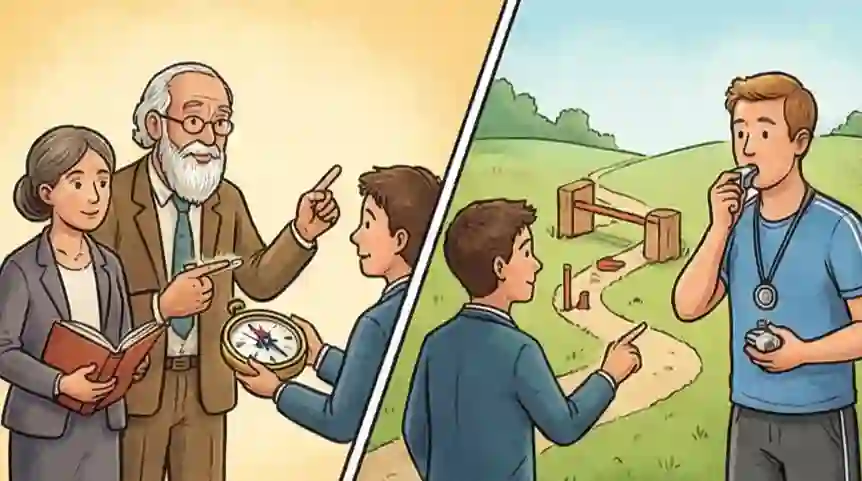
Upskilling is the process of learning new skills to get better at your current job. You stay in your field but add deeper knowledge or learn updated tools to move into a more senior role. Think of it as building a taller tower on a strong foundation.
Reskilling is the process of learning a completely different set of skills so you can move into a new career. You leave your current field and start fresh in a different one. Think of it as building a new foundation in a different location.
The key difference: upskilling moves you forward in your lane, while reskilling moves you into a new lane entirely. According to LinkedIn's Workplace Learning Report (2024), the average professional skill now has a shelf life of about 5 years, while digital skills may last as little as 18 months. This makes choosing the right path more urgent than ever.
Getting Better vs. Learning New Skills: A Look
| Factor | Getting Better (Sticking to It) | Learning New (Switching) | Who This Helps |
|---|---|---|---|
| The Appeal | Shows Deep Expertise | Shows a New Direction | Mid-career pros in stable fields |
| What Recruiters See | Low Risk Senior Hire | Exciting New Potential | Career changers with transferable soft skills |
| Search Engine Value | High Rank in Niche Area | High Rank in New Hot Topics | Anyone building a professional brand online |
| Main Danger | Skills Becoming Old News | Earning Less Money Temporarily | Workers in fast-changing or declining industries |
| Bottom line: Choose upskilling if your field is stable and you want to climb higher. Choose reskilling if your industry is shrinking or your skills are expiring faster than you can update them. | |||
The Simple Logic: What's the Difference and Which Do You Really Need?
To choose between improving your current skills or learning completely new ones, we need to look past buzzwords and focus on the math behind your career. From a smart perspective, this choice is based on one thing: how fast your skills are dying versus how hard you are to replace. This is the fight between How Quickly Knowledge Fades (how fast your value decays) and Your Established Value (how hard it is for someone else to do your job).
Deeply Connected Knowledge vs. Easy-to-Find Knowledge: How Hard You Are to Replace
Focus on Getting BetterHow It Works
In careers, we separate Deep Knowledge (things tied to company history, complex people skills, and special ways of executing strategy) from Easy Knowledge (basic skills you can learn from a quick video). Getting Better (Upskilling) is adding to your Deep Knowledge. When you are hard to replace, it means you have "speed from experience" in your company.
The Result
If the company loses you, they lose not just a worker, but years of behind-the-scenes context. From a thinking perspective, getting better at your current job makes it easier for your boss because they don't have to spend time searching for someone new. A Gallup and Workhuman study found that only 26% of U.S. employees strongly agree their organization encourages them to learn new skills, which means most companies are underinvesting in the people they'd struggle to replace. People often confuse "how long they've been there" with "how hard they are to replace." If your knowledge is only technical and not tied to context, you are easy to replace, no matter how long you've worked there.
Thinking Load and How Fast Your Field Expires
When to Learn New ThingsHow It Works
The choice to Learn New Things (Reskill) often isn't a choice; it's a reaction to areas where knowledge is Highly Unstable. Your brain can only handle so much "reorganizing." When the Usefulness of Your Skills lasts less than three years, your brain is constantly busy trying to keep up, leaving little energy for actual good work. This is the Leaking Bucket problem.
The Result
Learning new things is the plan to clear out your Past Investments (time spent mastering an old skill or language) so you can reset your thinking effort. TalentLMS research (2024) found that 69% of workers who completed reskilling or upskilling training said it improved their job performance. Even though the time where you are bad at the new thing (the "Valley of Death") is hard, it's better than the alternative: becoming useless slowly. Hiring systems see your profile as losing value every day if it's built on old terms, no matter how much you achieved before.
Arguing for Yourself vs. Taking Market Cues
Putting It Into PracticeHow It Works
When deciding, separate Market Trends (what everyone says) from Your Own Data. Trends are easily copied: they tell you to learn AI because it's popular, which leads to you being average everywhere instead of mastering your unique value.
The Result
Your Own Data asks: "Can my current foundation help me jump forward?" If your special knowledge is still relevant for a long time (like knowing complex sales processes), the market wants you to get better at it. You should focus on becoming the leader who uses new tools in your strong field, not switch to a junior role somewhere else.
Summary of When to Get Better vs. When to Switch
1. Relevant Skills + Hard to Replace: Get Better. You are unique. Focus only on strengthening your advantage.
2. Skills Outdated + Easy to Replace: Switch. Your current path is failing. It's better to start over than slowly sink.
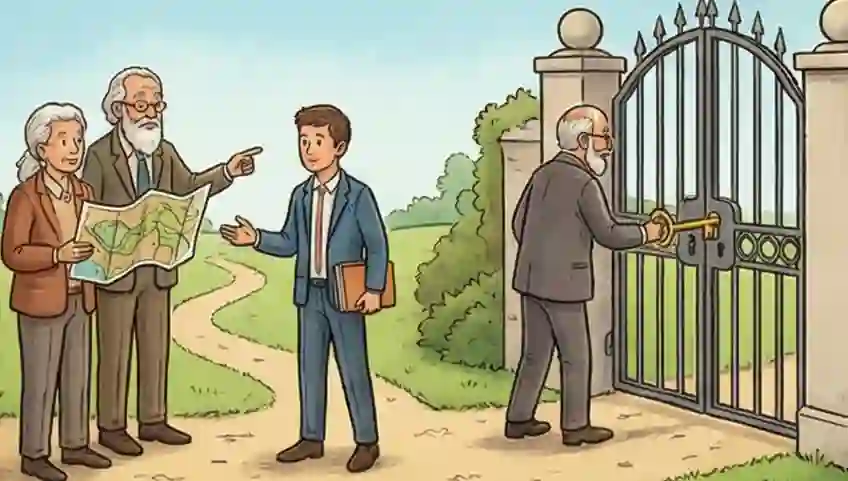
3. Skills Outdated + Hard to Replace: Mix It Up. Use your current value (context, relationships) to help you move into a skill area that will last longer.
The difference between a career that grows and one that fails isn't just working hard; it’s correctly figuring out how fast your current world is disappearing. Is your foundation a launching pad or a leaky boat? The answer is in the numbers.
Signals for Your Career Path: Getting Better vs. Switching
Getting Better: Showing Deep Authority
The Plan: This means becoming an expert in what you already do to reach the highest level in your field. You are telling the market you can solve hard problems that regular workers can't handle. Finding the right coach or mentor can speed up this process.
The Danger: You risk becoming the top expert in something nobody needs anymore. If your small area of expertise dies out, your specialized skills become a prison, making you overqualified for easy jobs and irrelevant for modern senior jobs.
Best For: When you are in a high-value field that won't disappear soon, and you want to go from being a solid worker to a must-have leader.
Switching: Showing You Can Change Direction
The Plan: This is a full career reset aimed at moving from a slow or dying area into a fast-growing one. It uses your life experience but adds a completely new set of technical skills to catch a rising market trend. Having both sponsors and mentors can help bridge the credibility gap during a switch.
The Danger: You will likely earn less money for a while because you are like a beginner again. You will compete with young people who have more energy and want lower pay. If you can't quickly show how your past experience helps your new role, you're just an expensive newcomer.
Best For: When your current industry is in serious decline or being automated, and you have enough savings to manage a temporary pay cut for a future that looks much better.
Self-Check Guide for Your Career
The One Who Climbs Higher
Keep GrowingYour Situation: You are good at your job and like your field, but you've hit a wall, or you need very specific expertise to get to the next big leadership level.
The Plan: Don't throw away the years of experience you have. Instead, add one specific, powerful skill—like learning how to use new tools in your leadership role—so you become the best and most updated version of who you already are.
The One Who Switches Paths
Time to ChangeYour Situation: You have good people and organization skills, but you are stuck in a dying field or one you dislike, and you want to move to a completely new area.
The Plan: To make a successful switch, you need to close the "Trust Gap." While your management skills travel with you, your technical skills are probably very basic in the new field. Learning new skills helps you build a new technical foundation so you can prove you know how to actually do the new job, not just talk about it.
The One Starting Fresh
New StartYour Situation: You just finished school and are entering a tough job market, or you've been away from work for a few years and your old skills are now seen as "old-fashioned" or useless.
The Plan: You are fighting the feeling from employers that you are a "risk." Improving old skills on a weak base is like fixing up a house with a cracked foundation. You need to rebuild your skills using what the industry uses today. Learning a needed new skill restarts your career timer so you enter the market as a valuable, modern worker instead of someone with outdated knowledge.
Using Cruit for Smarter Choices
For Switching
Career ExplorationFinds your "hidden talents" and skills that can move to new jobs, showing you other possible career paths and what skills you are missing.
For Getting Better
Job Analysis ToolGives you an advantage by showing exactly what skills you lack for jobs you want and creating personalized steps to fix those gaps.
For Making Choices
Career Advice ToolActs like an AI Coach to help you weigh the pros and cons of getting better versus switching, and to set clear, achievable goals.
Common Questions
Does switching careers erase my experience?
No. Switching careers is not deleting your history; it's smartly moving your knowledge to where it counts more. The worry about "starting over" often comes from being too attached to sunk costs.
In competitive job markets, your value isn't just your technical skills, but your "Experience Grit," the ability to use your years of professional sense in a new, more valuable role. A good switch doesn't reset your value; it opens up a higher earning limit that your old job couldn't offer.
Can I upskill and reskill at the same time?
This is the fastest way to end up "okay" at many things but great at nothing.
Splitting your focus means you won't gain the deep knowledge needed to excel at the advanced level, and you won't focus enough to switch careers successfully. Commit to one direction based on how quickly your current skills are fading. Trying to do both often means you are slowly making your current skills less valuable.
What if my field becomes obsolete while I upskill?
The goal of getting better is to become the expert whose knowledge is hardest to replace in your field.
If your research shows the core of your field is a "leaky bucket," then getting better is a waste of time; at that point, the only smart move is to switch directions.
How long does reskilling take?
Reskilling timelines vary from 3 months to 2 years depending on the skill gap between your current field and your target role.
Short bootcamps (3-6 months) work well for adjacent moves like marketing to product management. Larger jumps, such as moving from retail management to software development, often require 12-24 months of focused training. The World Economic Forum reports that 85% of employers now plan to prioritize workforce upskilling, meaning more company-funded programs are becoming available to shorten this timeline.
Focus on what matters.
Your choice to either build strongly on what you have or go through the difficulty of a career change is your first test of smart thinking. When you refuse to collect trendy, shallow certificates, you show you have the planning skill to focus on long-term gains over quick market fads. Choosing your path is not just about what you like, but a calculated way to avoid being average and to protect the value of your experience.
Use Cruit Today