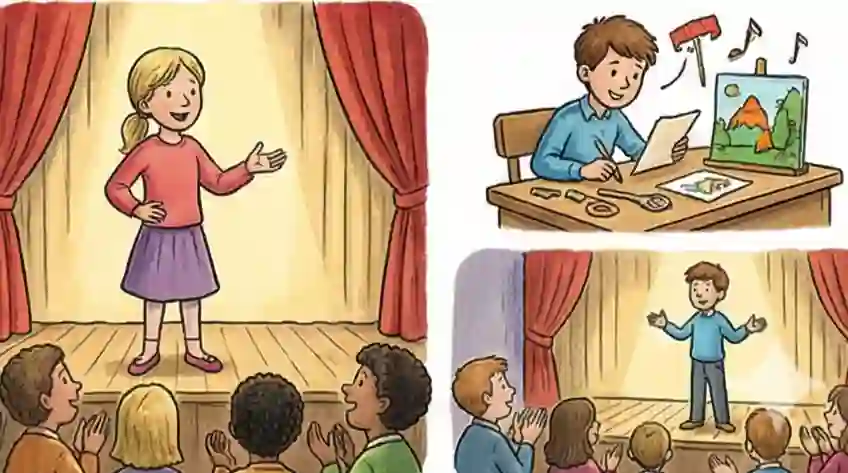
The Trade-Off: Looking Good vs. Getting Results
Most people spend their careers trying to be the "Perfectly Smooth Presenter." They think they need to copy a major stage presentation: practice every move, use simple slides, and tell perfect stories. They believe if they just look and sound like a "professional speaker," people will listen. In truth, this approach sets a trap that focuses on showmanship instead of what really matters: making an impact.
This desire to be polished comes at a real cost: the Authenticity Fee. People today are very good at spotting fake charm. When a presentation feels like a show, people immediately become suspicious. You end up worn out trying to keep up a role while your audience feels talked down to. They see your ideas as watered-down corporate talk, not real advice they can use. This doesn't build trust; it creates a barrier between you and the people you need to convince.
To really build influence that lasts, you need to switch to "The Live Check-Up." You must stop just giving answers and start figuring out tough problems right there, in the moment. This plan changes the goal from talking at people to investigating a high-stakes situation with them. You trade staged theater for real usefulness, acting like a trusted guide who thinks along with the room. By using your slides as a tool to check facts rather than read a script, you become a key strategic helper instead of just another performer.
What Is Public Speaking and Why Does It Matter?
Public speaking is the act of presenting ideas, data, or arguments to a live audience, whether in a boardroom, on a stage, or over video. It is one of the highest-leverage professional skills you can develop.
Strong presentation skills do more than help you communicate. They shape how colleagues, clients, and hiring managers read your intelligence and leadership potential. According to a 2024 analysis by Novoresume, 92% of professionals agree that excellent presentation skills are crucial to workplace success. Yet most people default to rehearsed performances that feel artificial, costing them the trust they are trying to earn. This post is about fixing that gap, not by practicing more, but by presenting differently.
How to Change Your Presentation Style for Bigger Results
-
01
Stop Trying to Be Perfect Forget overly practiced moves and "big stage" gestures. Be willing to show you are thinking on your feet. This lowers the audience's guard and proves your authority because you are solving a problem, not reciting a memorized speech.
-
02
Do The Live Check-Up Make your talk feel like a shared exploration of a difficult issue, not just you revealing a final answer. This change makes you a Trusted Guide instead of a forgettable narrator, getting people on board right away.
-
03
Use Visuals Like a Control Panel Design your slides to be flexible data screens that encourage questions right away, instead of sticking to a strict story. This lets you handle the room's specific problems as they come up, making you an Essential Helper instead of just someone talking at them.
-
04
Be Honest About the Messy Bits Point out the confusing or unresolved parts of the data where you know the audience is skeptical. This gets rid of the Authenticity Fee and builds a base of real honesty, making your ideas feel like useful facts, not just nice talk.
-
05
Make It a Team Effort Stop just explaining the "How" and start leading a session where you and the key people test the "Why." This breaks down the lecture feeling and turns your talk into an important working session that builds your long-term career value.
Looking at Industry Communication: Moving from Show to Strength
As someone who reviews industry communication, I have looked at how people talk right now. The following breakdown shows the key changes needed to move away from the overly polished "Same Old Way" to a useful, high-trust delivery that gets results right away.
Trying to get approval by looking perfect and charming through a practiced show.
Focusing on looking good and charismatic to get applause.
Focusing on showing a key flaw in the audience's current plan and fixing it right there in the meeting.
Using simple slides with dramatic pictures or single words to look professional.
Simple slides meant to look artistic and pleasing.
Using slides full of data or raw proof as a map for a shared look into a tough problem.
Giving a smoothed-out, predictable set of "Success Tips" using standard story patterns.
Sticking to simple story structures like the "Rule of Three" or a basic hero story.
Showing a surprising or "messy" real situation that immediately makes the audience question what they thought before.
Using practiced movements, timed pauses, and a detached "stage character."
A very rehearsed delivery that feels separate from the actual situation in the room.
Thinking out loud, accepting unclear moments, and acting like a consultant figuring things out with the audience.
Treating the audience as people who just watch and receive information, ending with a short Q&A.
A one-way data transfer, followed by polite, safe questions at the end.
Treating the audience as active partners, using their specific situation to test the ideas being shown.
Starting with a polished personal story meant only to make the speaker look good or explain their background.
A story focused on making the speaker look good to earn the right to talk.
Starting with a difficult challenge that shows a clear gap between what the audience is doing now and what they should be achieving.
The Operations Guide Plan: From Checking Facts to Taking Action
Get rid of the "Staged Show" problem by removing fancy polish. Your slides shouldn't tell a story; they should hold the tools for an investigation. This moves the focus from your talking to the audience's reality.
- Ditch the "About Me" Slide: Replace it with a Mention of Past Trouble: state a specific, hard truth about the company's past mistakes or current slowdown that everyone knows but avoids saying.
- The 3-Data Rule: For every five slides, you can only have one "clean" graph. The rest must be Real-Life Messiness: raw data printouts, actual customer complaints, or internal process charts that look used.
- The Map That Bends: Put a "Navigation Guide" at the bottom of your slides. This lets you jump to different spots based on how the room reacts, showing you are a guide, not a recording.
"This setup gets rid of the 'Staged Show' script and replaces it with a useful control panel for fixing problems here."
The Goal is to turn the slides from a "Stage Prop" into a "Tool" that forces the audience to truly focus on the work. (Do this 2 days before any important meeting.)
Immediately stop the audience from thinking you're fake by refusing to perform. Instead of a warm-up story, you give them a Surprising Truth that makes them rethink what they currently believe.
- Use the Odd Fact: Start with: "I looked at [Specific Data or Metric] and it makes no sense. We should be seeing X if our plan was working, but we are seeing Y. I'm here to figure out why with you."
- Ask a Thought-Provoking Question: Instead of telling them what you will teach, ask a question that challenges their view: "Does this strange result feel like a small mistake to you, or like the start of a big system failure?"
- State Your Intent: Clearly say you are skipping the filler because the situation is too important for a normal briefing.
"Does this strange result feel like a small mistake to you, or like the start of a big system failure?"
The Goal is to make the audience stop and think by breaking their usual mindset, making you the only person focused on the real issue. (Trigger: The first 3 minutes of the talk.)
Start using "Super Useful" methods right away. You aren't presenting anymore; you are acting as a top consultant doing a real-time review. This takes the pressure off having to keep up a fake personality because you are focused on the actual work.
- Marking Things Up Live: If technology allows, write directly on your slides. Cross out ideas that the room agrees are old news. Change numbers right there as you confirm them.
- Adding Productive Arguments: If the room is too quiet, use a Strong Challenge: "This slide looks good, but it's actually hiding a key problem. Who here is actually feeling the difficulty this data is covering up?"
- Allowed Detours: If a key person raises a complicated question, stop the main "presentation" and go deep into their specific situation. Use your slides like a reference book to support this unplanned deep dive.
"This slide looks good, but it's actually hiding a key problem. Who here is actually feeling the difficulty this data is covering up?"
The Goal is to turn the audience from "watchers" into "partners checking the facts together," making you essential to finding the solution. (This happens in the middle 60% of the talk.)
Replace the "Thanks, any questions?" slide with a clear "Next Steps Map." You aren't looking for applause; you're looking for an order to start the next phase.
- The Usefulness Map: Show one slide with three clear "Action Choices" based on the review you just did.
- Refuse to Just Summarize: Don't repeat what you said. Instead, give a Warning About the Future: "If we treat this like just another meeting and do nothing for 30 days, [This Bad Thing] will definitely happen."
- The Post-Meeting Tool: Give them a "Checklist for Finding Problems" (a simple sheet) so they can keep using your ideas after the meeting ends.
"If we treat this like just another meeting and do nothing for 30 days, [This Bad Thing] will definitely happen."
The Goal is to leave the room not as a "Great Speaker," but as the "Operations Guide" who just gave the team the exact map they needed. (This is for the final 5 minutes of the meeting.)
The Recruiter's View: Why Presentation Skill Adds 20% Value
When hiring for important roles, being technically skilled is just the minimum requirement. The person who can lead a meeting (or even just a video call) is the one who gets the job. Why? Because you are hired to make the person hiring you look good. This is why interviewers often ask how you answer "Why should we hire you?" before any technical question.
Focusing only on deep technical work but failing to explain the results to leaders. This forces the manager to constantly explain your work, making you seem less important strategically.
Mastering talks to turn complex work into interesting stories, making you someone who can lead meetings and pitches. This lowers the risk for the person who hired you.
- The "Executive Helper" Boost: Being able to speak publicly shows you can represent leaders and simplify complex decisions. Research tracked across career coaching data finds this skill is consistently linked to faster promotions, with 70% of employees confident in public speaking being more likely to reach management roles (CrossRiver Therapy, 2023).
- Talking Well is a Sign of Smart Thinking: Being able to simplify tough ideas into a story proves you really understand them at a high level. Hiring managers notice this: 59% of hiring managers rank public speaking skills as important when evaluating candidates (Novoresume, 2024).
- Public Events Speed Up Trust: Speaking at known industry events acts like a stamp of approval, building trust faster and skipping initial doubts.
Being good at presentations triggers automatic trust and makes you seem rare. This creates a "Good Impression Halo" where your speaking skill makes people think your leadership and strategy skills are better too, leading to more opportunities coming to you.
Cruit Tools for the Operations Guide Plan
Stage 1 Journal Tool
A place to save "Messy Facts," capture "Past Trouble Mentions," and fight against only remembering recent things.
Stage 2 Career Guide Tool
Automatically creates thought-provoking questions and surprising truths to help you seem more like an expert.
Stage 3 Interview Tool
Manages on-the-spot challenges and arguments by making quick response flashcards just for you.
Getting Past Roadblocks to Real Trust
Expert Look: Moving Past Just "Looking Good"
When content is too perfect, the old "TED-style" talk can actually hurt you. When a speaker seems too rehearsed, the audience starts to resist them emotionally, sensing the fancy presentation is hiding weak points. To connect, you must adopt "The Live Check-Up," making your talk a real-time problem-solving session that builds trust and authority instantly. If you're still building confidence on stage, the fundamentals of how to prepare for a talk or panel are worth reviewing before applying these advanced shifts.
If I don't stick to a script, won't I look unprepared?
Actually, the opposite is true. The "Stuck in the Same Way" Trap suggests that memorizing means you are an expert, but "The Live Check-Up" requires much deeper preparation.
You aren't guessing; you know your facts so well that you can handle any "messy situation" the audience throws at you. Ditching the script to deal with things as they happen shows you have real expertise that a memorized talk can't match.
But don't my listeners expect fancy slides and entertainment?
They might expect it, but they respect "Real Usefulness" more these days. Simple, high-quality slides can sometimes stop people from truly engaging with the content.
Switch from being an entertainer to being a helper by using slides as a "dashboard." The "showmanship" is replaced by the real energy of figuring something important out together.
Isn't dealing with complexity live riskier than just sticking to a planned talk?
Yes, but that risk is where real influence is built. Playing it safe leads to a forgettable, "too safe" talk that doesn't change anything.
Embracing the difficult moments proves you are a trusted guide who isn't scared of moments that challenge old ideas. The risk of being "real" is much smaller than the risk of being ignored.
How do I overcome fear of public speaking?
Start by reframing your goal. Instead of trying to look confident, focus on solving a real problem for your audience. Fear shrinks when your attention moves from yourself to their needs.
Practice in low-stakes settings first: team standups, small group meetings, recorded run-throughs. Around 75% of people experience some degree of public speaking anxiety (Novoresume, 2024), so you're not starting from an unusual place. What separates effective speakers is not the absence of nerves but where they direct their attention.
Should I memorize my presentation or use notes?
Neither extreme works well. Memorizing word-for-word creates a robotic delivery that collapses under any unexpected question. Going in without structure makes you look unprepared.
The better approach: know your data and core points deeply enough to talk about them conversationally. Use slides as a flexible prompt, not a script. This is what "The Live Check-Up" is built on: expertise deep enough to handle what the room actually needs, not just what you planned to say.
What makes a business presentation memorable?
Memorable presentations solve a specific problem in the room rather than just deliver information. People forget talks where they were talked at. They remember sessions where something was actually figured out together.
Use real data, name the tension everyone is feeling but avoiding, and involve the audience in reaching the conclusion. If they leave with a clear next step that came from the conversation, you've done your job. That's harder than a polished deck, and worth far more.
Stop acting and start fixing.
Leave behind the STATUS_QUO_TRAP of the "Perfectly Smooth Talk." By choosing the STRATEGIC_SHIFT to "The Live Check-Up," you change from a replaceable speaker to a trusted expert who solves big problems in real time.
Start SolvingFurther Reading

Why Should We Hire You?': Crafting a Compelling Pitch

The Basics of Public Speaking: How to Prepare for a Talk or Panel
