What Is Psychological Safety?
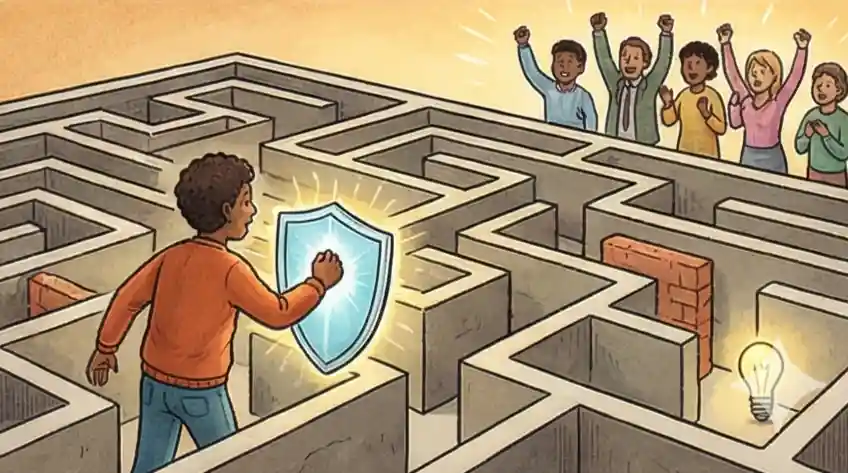
Psychological safety is the shared belief among team members that they can speak up, admit mistakes, and challenge ideas without fear of punishment or humiliation. The term was coined by Harvard Business School professor Amy Edmondson in 1999, and it has since become one of the most researched predictors of team performance.
It is not about being comfortable or avoiding conflict. It is specifically about whether your team believes the interpersonal risk of honesty is low enough to act on. According to Gallup research, improving psychological safety on a team produces a 27% reduction in turnover, a 40% drop in safety incidents, and a 12% increase in productivity. These are not soft outcomes. They show up on the balance sheet.
Google's internal Project Aristotle study — which analyzed 180 teams over two years — found that psychological safety was the single strongest predictor of team effectiveness, more important than individual talent, tenure, or seniority. Most managers still don't know this. And most are actively undermining it without realizing it.
What You Should Remember
Be the first to share when you mess up and what you learned. This shows your team that being great doesn't mean never failing.
Instead of asking judgmental "Why did you do that?" questions, ask collaborative "How can we solve this?" questions. This keeps the focus on fixing things, not blaming people.
In every meeting, specifically ask for "one reason this plan might fail." This makes challenging ideas a normal and expected part of the process.
Use a set way to go around the room so every single person shares their view before a final choice is made. This stops a few loud people from taking over.
The Nice Lie: Why Being Too Polite Harms Your Team
Most leaders actually hold back their team's success by being too "nice." They confuse true team safety with having an office where no one ever argues and everyone agrees. This is the "Nice Lie," and it creates a false sense of peace. When you care more about being polite than being honest, your team hides problems, ignores bad information just to keep things smooth, and lets costly projects fail quietly because no one wanted to be the one to bring bad news.
For top executives, this isn't just a minor leadership issue; it's a significant way to mismanage risk. When things are important, the speed at which you get good information is your most valuable tool. If your people are scared to speak up, that information moves slowly, leaving you unaware of "hidden failures" until they start showing up on the company's money reports. A 2024 Mental Health America survey found that 63% of workers don't feel safe sharing their opinions at work — which means most leaders are operating without the full picture.
If you are not hearing the difficult truths, you are paying your experts for their knowledge but only getting back their obedience. This path usually leads to losing the respect of your team and stalling your own career.
The Main Problem
See also: How to run one-on-ones that actually surface problems and building trust as a new manager.
The issue is a company culture that rewards looking perfect on paper, making managers hide bad news to look good. To fix this, you have to stop aiming for everyone to be personally comfortable and start aiming for good arguments and challenging ideas.
True safety isn't about feeling cozy; it's about being able to have tough conversations without worrying about getting punished.
The Expert Leader's Change
Smart leaders solve this by making a clear difference between tough talk and being mean. They create an atmosphere of "speak honestly, check your ego" where the main goal is to find the right answer, not to prove you are the one with the right answer.
- When you treat every mistake as a lesson the company has already paid for, you replace blaming people with finding out what went wrong in the system.
- This turns your team from a group of careful followers into a highly effective information-gathering team.
"Psychological safety isn't about being nice or sparing people's feelings. It's about removing the interpersonal fear that stops people from contributing their best thinking."
The Three Steps to Team Safety
Team safety begins when the leader stops trying to "Protect the Plan" and starts acting like the "Lead Investigator." You need to clearly state that a person’s value to the company is separate from whether their current project succeeds or fails. By being the first to openly discuss your own mistakes, you lower the danger level for everyone else and stop the team from hiding bad news to protect their image.
During your next team meeting, do a "Vulnerability Check-in." Talk about a real, recent mistake you made that cost time or money—don't make excuses. Then, ask the team to help you find the "system gap" that allowed your mistake to happen, moving the focus from you as a person to the way things are done.
"Last project, I guessed the timeline wrong by two weeks because I ignored the data from engineering. That was my fault, and it cost us a late fee. I'm sharing this so we can figure out what in our reporting process let me overlook that data, so we can fix the process, not blame the person."
In high-level hiring, we look for leaders who are "Quick to Adapt." If a manager's reports always look perfect, we get worried. It often means they are hiding information, which is like having a hidden ticking bomb.
You must get rid of "Fake Harmony" by making it a required part of the job to challenge ideas. In this stage, you shift the team from being "polite" to being "honest." The goal is to make questioning an idea seem like helping the company, not attacking a coworker.
Use the "Pre-Mortem" before any big launch. Ask the team to pretend it's six months in the future and the project failed badly. Everyone must give one reason why it failed. This gives everyone permission to focus on the negative without being seen as someone who "rocks the boat."
"We all care about this project, but for the next 20 minutes, I need us to be its harshest critics. If this project fails by the end of the year, what will be the 'hidden problem' we ignored today? Don't worry about being polite; I need the toughest feedback you have so we can build a better defense."
When we look for top leaders, we check if they have a team comfortable telling them they are wrong. A leader whose team never disagrees is a "Danger Sign" because talented people eventually leave places where they can't speak up. BCG Global research (2024) found that when psychological safety is low, 12% of employees plan to quit — four times the rate of those on high-safety teams.
To beat the problem of only rewarding perfect results, you have to celebrate how fast bad news travels. You need to make the act of pointing out a mistake more valuable to the employee's career than hiding it until it's too late.
For every time a goal is missed, create a "Post-Mortem Report" that doesn't ask "Who did it wrong?" Instead, it only has two parts: "What did we expect to happen?" and "What did the numbers actually show?" Give public praise to the person who spots the problem first for their great "Risk Finding."
"I want to thank Sarah for telling us about the drop in user interest today. Because she flagged this 'bad news' early, we saved three weeks of work on a feature nobody wanted. This is exactly the kind of 'Honest Reporting' that helps us win."
Promotions are rarely just about doing your job well; they are about "Managing Surprises." Leaders get promoted when they prove they can bring up and fix problems before those problems reach the CEO. Psychological safety is the best way to make sure those problems get brought up. Ecsell Institute research shows leaders rated 9 or 10 by their reports achieve an average psychological safety score of 84% on their teams — compared to just 36% for leaders rated 6 or below. The gap in team openness is not random; it is a direct reflection of leader behavior.
How Cruit Helps You Use These Safety Steps
To Spot Problems Early
Journaling ToolWrite down what you learn and missed goals right away to capture "Early Warnings" before they become huge problems.
To Change How You Lead
Career Advice ToolLearn how to switch to being an "Investigator" by testing your plans against a tough AI Mentor before you share them widely.
To Handle Tough Talks
Interview Prep ToolPractice delivering your "Honest Scripts" by role-playing difficult scenarios with an AI coach.
FAQ: Psychological Safety on Your Team
Does psychological safety make teams less accountable?
No. You are mixing up safety with comfort. In a polite company, people hide their lack of effort behind smiles and fake reports. In a truly safe company, there is nowhere to hide. When you reduce the social cost of admitting an error, you increase accountability — not decrease it. Real success requires the roughness of truth. If someone can't handle having their work questioned, they aren't "safe" — they're underperforming.
Will sharing my failures make my team lose respect for me?
Your authority doesn't come from being perfect — it comes from being reliable. If you act like you never fail, your team wastes energy managing your ego instead of solving problems. They already know you make mistakes; hiding them just makes you look insecure. When they see you value truth over being "right," they stop holding back the bad news you need to hear before it hits the budget.
How do I build psychological safety if my company punishes mistakes?
Become the information shield for your team. Separate what you learn internally from what you report externally. Inside the team, treat every mistake as a lesson already paid for. Outside, report results and improvements. You absorb the heat from the "messy middle" so your people feel safe enough to try new things. If you pass the "zero errors" pressure straight down, they will lie to you — and you'll be the last to know a project is sinking.
What are the warning signs that your team lacks psychological safety?
Watch for these patterns: meetings where everyone agrees with the most senior person in the room; problems that only surface on quarterly reports rather than when they first appear; team members who only speak up in one-on-ones but go quiet in groups; and a culture where delivering bad news is treated as a performance issue. If your team's updates are always positive, something is wrong. Real projects have problems — if yours never do, you're not seeing them.
How long does it take to build psychological safety on a team?
You can shift behavior within weeks by consistently modeling the three steps in this guide — but real cultural change takes 3 to 6 months of sustained behavior. The most important factor is consistency: every time you react badly to bad news, you reset the clock. One public blaming incident can undo months of trust-building. The fastest path is to start with a single meeting ritual — the pre-mortem — and build from there. One structured conversation a week creates compound trust over time.
Is psychological safety the same as being nice to your team?
No. This is the most common misunderstanding. Psychological safety is not about softness, harmony, or avoiding conflict. According to Harvard Business School professor Amy Edmondson, who coined the term, it specifically means people believe they won't be humiliated or punished for speaking up. A psychologically safe team can have heated debates, hold people to high standards, and deliver hard feedback — all without fear. In fact, the absence of conflict is usually a sign that safety is low, not high.
Stop Caring About Manners, Start Leading for Results
Companies don't want quiet employees; they desperately want valuable professionals who speak clearly and honestly in important meetings.
If you stick to the AMATEUR_MISTAKE of choosing comfort over truth, you become a danger who hides costly problems behind a friendly face.
To keep your leadership strong, you must make the EXPERT_CHANGE: trade fake peace for the tough conversations that actually save companies.
True professional strength comes from having the guts to let your team feel uncomfortable so they can eventually achieve unstoppable success.
Lead for Results