The Feynman Technique: The Best Way to Learn Anything Quickly
The Feynman Technique: The Best Way to Learn Anything Quickly
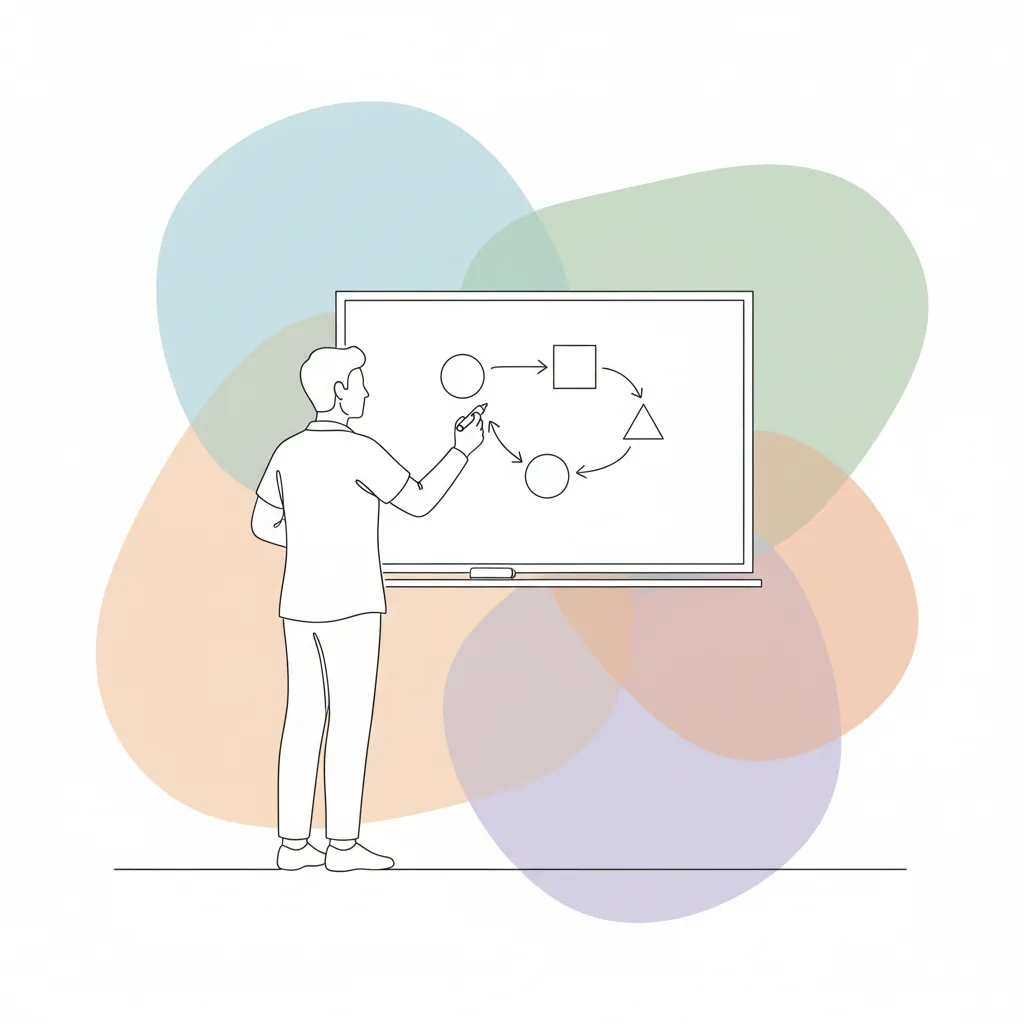
The Feynman Technique is a mental model for rapid learning that involves explaining a concept in simple terms, as if you were teaching it to someone else. For professionals, it is a powerful strategy to quickly master new skills, technologies, or industry knowledge, which is essential for upskilling and career advancement.
What is the Feynman Technique?
The Feynman Technique is a four-step process for deconstructing any topic to understand it at a fundamental level. It was developed by the Nobel prize-winning physicist Richard Feynman, who was renowned for his ability to explain complex ideas with profound clarity.
At its core, the technique forces you to move beyond simply memorizing information. It ensures you truly grasp the underlying principles of a concept by challenging you to articulate it simply.
Mini-definition: Active Recall - This is the process of actively retrieving information from your memory, rather than passively reviewing it. The Feynman Technique is a powerful form of active recall.
Why is the Feynman Technique So Effective for Career Growth?
In your career, you are constantly required to learn—a new software, a new project management framework, or the nuances of a new market. This technique helps you learn these things faster and more deeply.
It exposes gaps in your understanding (what author David Epstein calls "desirable difficulties") before you're in a high-stakes meeting. By identifying what you don't know, you can focus your learning efforts precisely where they are needed most.
This method also helps you overcome the curse of knowledge—an inability to remember what it's like not to know something. This makes you a better communicator, leader, and collaborator, as you can explain your work clearly to colleagues outside your domain.
The 4 Steps of the Feynman Technique Explained
The process is straightforward and can be applied to any subject, from coding languages to strategic business frameworks.
Step 1: Choose Your Concept & Study It Select the topic you want to learn. Gather your source materials—books, articles, course notes—and study them as you normally would.
Step 2: Teach It to a Child Write down an explanation of the concept on a blank sheet of paper. Use the simplest language possible, as if you were teaching it to a 12-year-old. Avoid jargon and complex terms.
Step 3: Identify Your Knowledge Gaps & Go Back When you get stuck or find yourself using complex language, you've found a gap in your understanding. Return to your source material to fill in these gaps until you can explain the concept simply.
Step 4: Review and Simplify Further Review your simplified explanation. Read it out loud to catch any awkward phrasing. Create simple analogies. Organize your notes into a clear narrative that you can understand and recall easily.
How to Apply the Feynman Technique to Learn a New Skill at Work
Imagine you need to learn about a new analytics platform like Google Analytics 4 for your marketing role.
First, you would study the official documentation and training materials. Then, you'd write a simple explanation titled "How GA4 Tracks Website Visitors."
As you write, you might get stuck explaining "event-based data models." This is your knowledge gap. You would go back to your sources to understand it better, then re-write that section in plain English: "Instead of just page views, GA4 tracks specific actions like button clicks or video plays."
Finally, you would refine your notes into a one-page summary. This document becomes your go-to reference and a testament to your deep understanding of the platform.
FAQ: Common Questions About the Feynman Technique
How do I start with the Feynman Technique?
Begin with a small, specific concept. Grab a notebook or open a digital document, write the concept's name at the top, and start explaining it in your own words.
Can I use the Feynman Technique for soft skills?
Yes. For a skill like "giving constructive feedback," you could explain the principles and steps of a framework like the Situation-Behavior-Impact (SBI) model as if teaching it to a new manager.
What if I get stuck on a concept?
Getting stuck is the most important part of the process! It shows you exactly where you need to focus. When you're stuck, go back to your study materials and concentrate only on that specific part of the concept.
Passive Learning vs. Feynman Technique
| Feature | Passive Learning (Reading, Watching Videos) | The Feynman Technique |
|---|---|---|
| Process | Information flows one way: into your brain. | You actively process, synthesize, and recreate information. |
| Effort | Low cognitive effort. Feels easy and productive. | High cognitive effort. Can feel difficult and slow. |
| Outcome | Creates an "illusion of competence." You recognize concepts but can't explain them. | Builds genuine, durable understanding. You can apply and teach the concepts. |
How Cruit Helps You Master New Skills Faster
The Feynman Technique requires a space to reflect, write, and organize your thoughts. Cruit's platform is designed to support this deep learning process for your career.
You can use the Journalling module as your digital notebook for every step of the Feynman Technique. Create a new entry for each concept you're learning, write out your simplified explanations, and refine them over time. Cruit's AI can then help you extract the key skills you've documented, turning your learning efforts into a tangible record of your capabilities.
The Career Guidance module can also help you identify which skills to learn in the first place. By defining your career goals, Cruit suggests areas for development, giving you a strategic roadmap for what to learn next using the Feynman Technique.
This guide was created by Cruit, a career growth platform that helps professionals build and execute their career strategy.